
U.S. Insulin Pump Market Size to Surpass USD 5.13 Billion by 2035
List of Contents
ToggleWhat is the U.S. Insulin Pump Market Size in 2026?
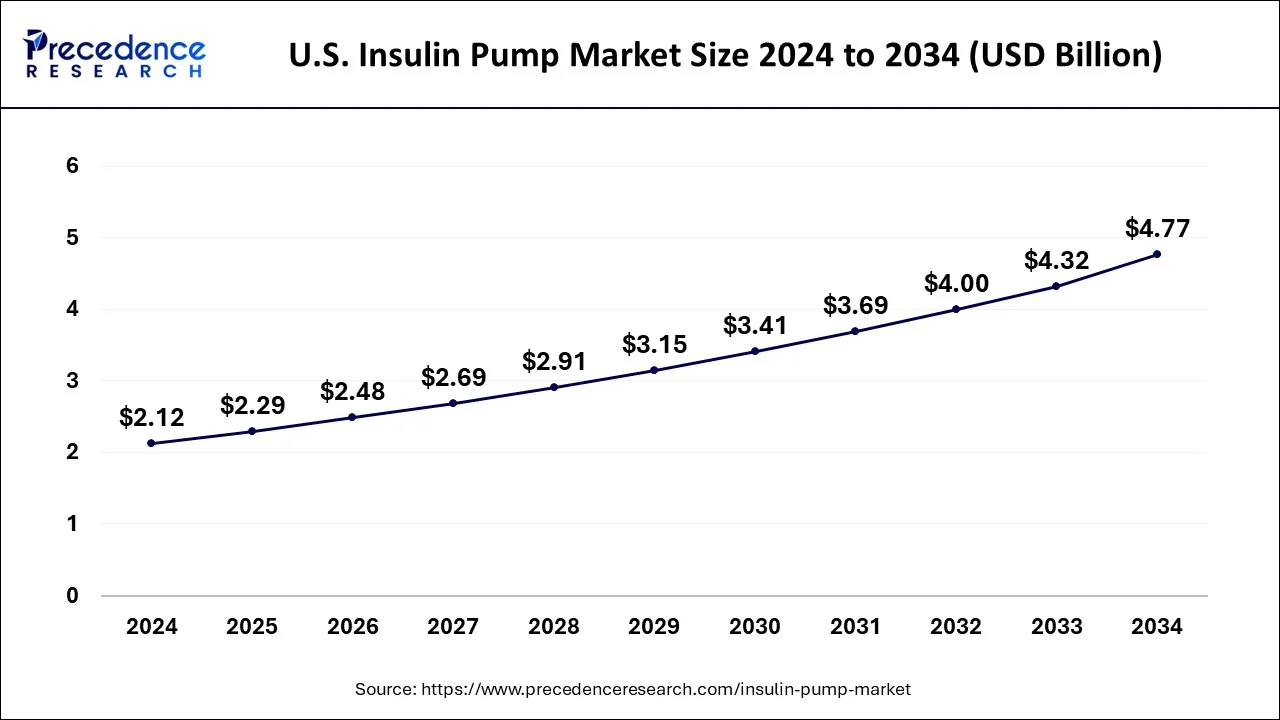
The U.S. insulin pump market size was calculated at USD 2.29 billion in 2025 and is estimated to grow from USD 2.48 billion in 2026 to approximately USD 5.13 billion by 2035, registering a CAGR of 8.40% during the forecast period from 2026 to 2035.
Key Takeaways
- By pump type, the tethered pump segment held the largest market share in 2025.
- By pump type, the patch pump segment is expected to expand at the highest CAGR during the forecast period.
- By product, the MiniMed segment held the largest market share in 2025.
- By product, the tandem segment is expected to expand at the fastest rate during the forecast period.
- By accessories, the insulin set insertion devices segment held the highest share of the market in 2025.
- By accessories, the insulin reservoir segment is expected to grow with the highest CAGR during the forecast period.
U.S. Insulin Pump Market Market Overview
The U.S. insulin pump industry comprises manufacturers, distributors, and healthcare providers involved in the development, distribution, and adoption of wearable devices designed for diabetes management. The market is primarily driven by the increasing adoption of continuous glucose monitoring (CGM) systems and automated insulin delivery technologies. Additionally, ongoing advancements in insulin pump technology, a growing diabetic population, and supportive reimbursement policies across various healthcare settings are expected to further accelerate market growth during the forecast period.
U.S. Insulin Pump Market Scope
| Report Coverage | Details |
| Market Size in 2025 | USD 2.29 Billion |
| Market Size in 2026 | USD 2.48 Billion |
| Market Size by 2035 | USD 5.13 Billion |
| Market Growth Rate from 2026 to 2035 | CAGR of 8.40% |
| Base Year | 2025 |
| Forecast Period | 2026 to 2035 |
How is AI Revolutionizing the U.S. Insulin Pump Market?
Artificial intelligence (AI) plays a pivotal role in the U.S. insulin pump industry by serving as the core intelligence behind Automated Insulin Delivery (AID) systems. Advanced machine learning algorithms continuously analyze real-time glucose data collected from Continuous Glucose Monitors (CGMs), enabling insulin pumps to predict blood glucose trends and automatically adjust insulin delivery.
These AI-powered systems can increase, decrease, or temporarily suspend insulin administration to help prevent episodes of hyperglycemia and hypoglycemia. By automating routine insulin management tasks, including overnight corrections and micro-adjustments, AI enhances treatment precision, reduces the burden of manual monitoring, and improves overall diabetes management outcomes for patients.
Market Dynamics
Drivers
Robust Healthcare Infrastructure
A robust healthcare infrastructure in developed countries drives the U.S. insulin pump market by seamlessly integrating advanced, AI-based medical devices into daily clinical practice. It fuels adoption via strong insurance coverage, comprehensive patient education, along with a competitive ecosystem of major manufacturers, which consistently push technological boundaries. Initiatives by organizations such as the CDC and dedicated pump-care programs educate patients and clinicians, which encourages early adoption and long-term compliance.
Restraint
Reimbursement Hurdles
Reimbursement hurdles act as a primary restraint for the U.S. insulin pump market. High costs of insulin pumps and even the administrative complexities required to obtain insurance coverage. These financial and procedural barriers deter patients from adopting advanced diabetes management solutions.
U.S. Market Trends: Country-Level Analysis
- Shift Toward Advanced Devices: There is a rapid shift from simple delivery tools to automated artificial pancreas systems. This shift expands the target patient base, improves treatment compliance, and drives wider market adoption. Pumps with smartphone connectivity and data-sharing features enable patients to manage their condition discreetly and share real-time data with caregivers and endocrinologists.
- Investments: Investments drive R&D for technological breakthroughs, expand access to telehealth, and scale manufacturing of advanced AI-based closed-loop systems. Venture capital and corporate investments are focused on tubeless patch pumps, offering patients a more discreet and minimally invasive alternative to traditional tethered pumps.
- Regulatory Approvals: They unlock insurance coverage, expand the addressable patient base, including type 2 diabetes patients, and validate the safety and interoperability of AI-based closed-loop algorithms. In the U.S., insurers and Medicare typically cover only pumps and consumables that have received formal FDA clearance.
U.S. Insulin Pump Market Segment Insights
Pump Type Insights
Product Insights
The MiniMed segment dominated the market in 2025 due to its advanced closed-loop automation systems, which enabled highly effective and reliable diabetes management solutions. Its ability to integrate seamlessly with proprietary and partner CGM sensors created a comprehensive, connected ecosystem that improved glucose control and strengthened its competitive position in the market.
The tandem segment is expected to grow at the highest CAGR during the forecast period. Tandem transformed the market by enabling users to update their pump software at home. Instead of buying a completely new apparatus, users can upgrade their pumps to feature newly approved algorithms without needing fresh hardware. Tandem pumps feature color touchscreen displays, easy-to-read, rechargeable batteries, and even remote mobile bolusing capabilities via their Tandem Diabetes Care app.
Top Companies Operating in the U.S. Insulin Pump Market
- Medzer is a healthcare equipment manufacturer that offers a range of medical devices and solutions for hospitals, clinics, and healthcare facilities. The company focuses on delivering reliable and cost-effective medical technologies to support patient care.
- Cequr SA specializes in simple and wearable insulin delivery solutions for people with diabetes. Its innovative insulin patch devices are designed to improve adherence and simplify diabetes management.
- Medtronic is a leading developer of insulin pump systems and diabetes management technologies. The company offers advanced automated insulin delivery solutions integrated with continuous glucose monitoring systems.
- Insulet Corporation is known for its Omnipod® tubeless insulin delivery platform, which provides a discreet and automated insulin management experience. The company focuses on improving convenience and outcomes for people with diabetes.
- Tandem Diabetes Care develops innovative insulin pumps and diabetes management software solutions. Its products feature advanced automation capabilities and integration with continuous glucose monitoring technologies to enhance glycemic control.
Check this report to: Super Disintegrants Market
Get this report to explore global market size, share, CAGR, and trends, featuring detailed segmental analysis and an insightful competitive landscape overview: https://www.precedenceresearch.com/sample/8443
You can place an order or ask any questions. Please feel free to contact us at sales@precedenceresearch.com |+1 804 441 9344

- U.S. Insulin Pump Market Size to Surpass USD 5.13 Billion by 2035 - June 10, 2026
- Aptamers Market Size to Hit USD 26.23 Billion by 2035 - June 9, 2026
- AI in Medical Billing Market Size to Attain USD 45.38 Billion by 2035 - June 8, 2026