
Multiomics Market Size to Lead USD 13.20 Billion by 2035
The global multiomics market size is calculated at USD 3.24 billion in 2025 and is predicted to increase from USD 3.70 billion in 2026 to approximately USD 13.20 billion by 2035, expanding at a CAGR of 15.18% from 2026 to 2035.
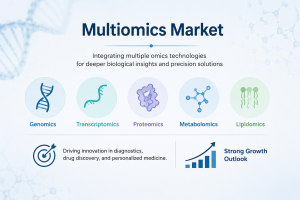
Multiomics Market Overview
The global multiomics market was valued at approximately USD 3.24 billion in 2025 and is projected to reach around USD 13.20 billion by 2035, expanding at a CAGR of 15.18% during the forecast period. The rapid growth reflects increasing demand for precision medicine, advancements in sequencing technologies, and rising investments in biomedical research.
As healthcare transitions from generalized treatment approaches to personalized therapies, multiomics technologies are becoming essential tools for understanding patient-specific biological variations and developing targeted interventions.
What is Multiomics?
Multiomics refers to the integration of data from multiple “omics” disciplines to gain a holistic understanding of biological processes. Unlike traditional single-omics studies, multiomics combines information from various molecular levels, enabling researchers to uncover complex disease mechanisms and identify more accurate biomarkers.
Key multiomics platforms include:
- Genomics – Study of DNA and genetic variations
- Transcriptomics – Analysis of RNA expression
- Proteomics – Examination of proteins and their functions
- Metabolomics – Assessment of metabolites within cells and tissues
- Epigenomics – Study of gene regulation mechanisms
By integrating these datasets, researchers can better understand disease progression, drug response, and personalized treatment pathways.
Strategic Collaborations Between Pharma and Biotechnology Companies
Strategic partnerships between pharmaceutical companies, biotechnology firms, academic institutions, and technology providers are becoming increasingly important in the multiomics market. These collaborations enable organizations to combine expertise, share resources, and accelerate the development of innovative healthcare solutions.
Pharmaceutical companies are leveraging multiomics technologies to gain deeper insights into disease mechanisms and identify promising drug targets. By partnering with specialized biotechnology firms that possess advanced sequencing, proteomics, or data analytics capabilities, drug developers can significantly improve research efficiency and reduce development timelines.
Collaborative research agreements are particularly common in oncology, immunology, neuroscience, and rare disease research. Through these partnerships, organizations can access larger datasets, advanced computational platforms, and specialized scientific expertise that may not be available internally.
Investment Trends Shaping the Global Multiomics Industry
Investment activity within the multiomics sector has grown substantially over the past decade, reflecting increasing confidence in the technology’s potential to transform healthcare and life sciences. Venture capital firms, private equity investors, pharmaceutical companies, and government agencies are actively funding companies developing innovative multiomics solutions.
One of the primary areas attracting investment is precision medicine. Investors recognize that multiomics technologies can provide comprehensive biological insights that support personalized treatment strategies, making them a critical component of next-generation healthcare systems.
Artificial intelligence-driven multiomics platforms are also receiving significant funding. As the volume of biological data continues to expand, AI-powered analytics solutions are becoming essential for extracting meaningful insights from complex datasets. Companies developing machine learning algorithms for biomarker discovery, disease prediction, and drug development are attracting substantial investor interest.
Technological Advancements in Sequencing and Data Analytics
The declining cost of next-generation sequencing (NGS) has dramatically improved accessibility to omics research. Advanced sequencing technologies now generate large-scale datasets faster and more accurately than ever before.
Additionally, innovations in:
- Mass spectrometry
- Single-cell analysis
- High-throughput screening
- Cloud computing
- Artificial intelligence
are enhancing the efficiency and scalability of multiomics research.
Increasing Prevalence of Chronic Diseases
Chronic diseases such as cancer, diabetes, cardiovascular disorders, and neurodegenerative diseases continue to rise globally.
These conditions often involve complex biological interactions that cannot be fully understood using a single omics approach. Multiomics provides comprehensive molecular insights that help researchers identify disease mechanisms and develop targeted treatment strategies.
Segment Analysis
By Platform
Genomics Leads the Market
Genomics currently dominates the market because it serves as the foundation for most multiomics studies. Falling sequencing costs and widespread adoption of genomic testing continue to support segment growth.
Proteomics Shows Strong Growth Potential
Proteomics is expected to grow rapidly due to advances in mass spectrometry and increased demand for protein biomarker discovery in pharmaceutical research.
By Application
Oncology Remains the Largest Segment
Cancer research represents the largest application area for multiomics technologies.
Researchers use multiomics to:
- Understand tumor heterogeneity
- Develop targeted therapies
- Predict treatment responses
- Identify novel biomarkers
The increasing global burden of cancer continues to drive investment in multiomics-based oncology research.
Neurology Emerging as a High-Growth Area
Neurological disorders such as Alzheimer’s disease, Parkinson’s disease, and multiple sclerosis are becoming major research priorities.
Multiomics enables scientists to study complex molecular interactions involved in neurodegeneration, supporting the development of new diagnostic and therapeutic approaches.
Regional Analysis
North America
North America holds the largest share of the global multiomics market due to:
- Strong biotechnology ecosystem
- Advanced healthcare infrastructure
- Significant R&D investments
- Presence of leading genomics companies
The region benefits from substantial support from government agencies, academic institutions, and private investors.
Europe
Europe remains a major market driven by:
- Growing precision medicine initiatives
- Collaborative research programs
- Strong academic research networks
- Government funding for genomics projects
Countries such as Germany, the United Kingdom, and France continue to invest heavily in multiomics research.
Asia-Pacific
Asia-Pacific is projected to experience the fastest growth during the forecast period.
Growth drivers include:
- Expanding biotechnology sector
- Increasing healthcare expenditure
- Rising genomics research activities
- Government support for precision medicine programs
China, Japan, South Korea, and India are emerging as important contributors to regional market growth.
Challenges Facing the Industry
Despite its tremendous potential, the multiomics market faces several challenges:
Data Complexity: Multiomics generates massive datasets that require sophisticated computational infrastructure and expertise.
High Implementation Costs: Advanced sequencing platforms, mass spectrometry systems, and bioinformatics solutions involve substantial investment.
Lack of Skilled Professionals: The shortage of bioinformaticians, computational biologists, and data scientists remains a significant barrier.
Conclusion
The multiomics market is poised for remarkable expansion as healthcare moves toward precision medicine and data-driven therapeutic development. By integrating genomics, proteomics, transcriptomics, and metabolomics, multiomics technologies provide a comprehensive understanding of biological systems that traditional approaches cannot achieve.
Growing investments in biotechnology, advancements in sequencing technologies, increasing adoption of AI, and rising demand for personalized healthcare are expected to drive sustained market growth over the next decade. As researchers continue to unlock the complexities of human biology, multiomics will play a pivotal role in shaping the future of diagnostics, drug discovery, and precision medicine

- Multiomics Market Size to Lead USD 13.20 Billion by 2035 - June 19, 2026
- Health and Wellness Market Size to Worth USD 7.76 Trillion by 2035 - June 19, 2026
- Cell and Gene Therapy Market Size to Surpass USD 47.18 Billion by 2035 - June 17, 2026