
Whey Protein Market Size, Growth Trends, and Forecast 2026 to 2035
The global whey protein market size was valued at USD 10.65 billion in 2025 and is expected to increase from USD 11.60 billion in 2026 to approximately USD 24.72 billion by 2035, expanding at a CAGR of 8.79% during the forecast period.
The market is experiencing significant growth due to rising health consciousness, increasing demand for sports nutrition products, growing fitness participation, and expanding applications of whey protein in food, beverages, personal care, and infant nutrition products. Consumers are increasingly adopting protein-rich diets to support muscle development, weight management, immunity enhancement, and overall wellness.
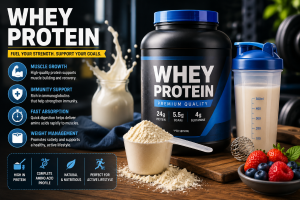
Whey Protein Market Overview
Whey protein is a high-quality protein derived as a by-product during cheese and casein production. It contains essential amino acids, branched-chain amino acids (BCAAs), calcium, phosphorus, magnesium, potassium, and bioactive compounds that support muscle growth, recovery, and overall health.
Advancements in ultrafiltration, microfiltration, and nanofiltration technologies have enabled manufacturers to improve whey protein purity, functionality, and production efficiency. As consumer demand for functional nutrition continues to grow, whey protein has become a preferred ingredient in sports supplements, meal replacements, infant formulas, functional beverages, and clinical nutrition products. The growing popularity of active lifestyles, preventive healthcare, and personalized nutrition is expected to support long-term market expansion.
Whey Protein Market Size and Forecast
| Year | Market Size (USD Billion) |
|---|---|
| 2025 | 10.65 |
| 2026 | 11.60 |
| 2035 | 24.72 |
| CAGR (2026-2035) | 8.79% |
Download the Sample: https://www.precedenceresearch.com/sample/2530
Whey Protein Market Value Chain Analysis
- Raw Material Procurement
Dairy producers focus on securing high-quality milk supplies and sustainable sourcing practices.
- Processing and Manufacturing
Advanced filtration technologies improve protein concentration, purity, and nutritional value.
- Product Development
Manufacturers continuously innovate flavors, formulations, and functional applications.
- Distribution and Retail
Products are distributed through supermarkets, specialty stores, pharmacies, fitness centers, and e-commerce platforms.
- Consumer Consumption
End users include athletes, bodybuilders, lifestyle consumers, and clinical nutrition patients.
What is the Role of AI in the Whey Protein Market?
Artificial Intelligence (AI) is transforming the whey protein industry by improving manufacturing efficiency, product innovation, quality management, and supply chain optimization.
AI-driven analytics enable manufacturers to analyze consumer preferences, predict demand patterns, optimize formulations, and improve ingredient sourcing. Machine learning models help identify new product opportunities, personalize nutrition solutions, and enhance production efficiency.
Key Benefits of AI in Whey Protein Manufacturing
Predictive Manufacturing
- Reduces equipment downtime
- Improves production efficiency
- Minimizes operational costs
Product Development
- Accelerates formulation innovation
- Supports personalized nutrition products
- Enhances flavor and texture optimization
Quality Assurance
- Real-time defect detection
- Improved consistency and purity
- Reduced production waste
Supply Chain Optimization
- Accurate demand forecasting
- Efficient inventory management
- Better procurement planning
What Factors are Driving the Growth of the Whey Protein Market?
Rising Demand for Protein-Rich Diets
- Consumers are increasingly incorporating protein supplements into their daily nutrition routines to support muscle recovery, weight management, and overall wellness. This trend is significantly boosting demand for whey protein products worldwide.
Growing Fitness and Sports Participation
- The increasing number of gym memberships, fitness enthusiasts, athletes, and recreational sports participants is driving demand for high-performance protein supplements.
Expanding Functional Food Industry
- Manufacturers are incorporating whey protein into snacks, beverages, dairy products, and meal replacements to meet rising consumer demand for functional and fortified foods.
Whey Protein Market Major Growth Factors
Health and Wellness Awareness
- Rising focus on preventive healthcare
- Growing demand for nutritional supplements
- Increased awareness of protein benefits
Sports Nutrition Expansion
- Increasing athlete population
- Growing bodybuilding culture
- Rising fitness center memberships
Product Innovation
- Advanced whey isolates and hydrolysates
- Ready-to-drink protein beverages
- Functional food applications
E-commerce Growth
- Improved product accessibility
- Wider brand availability
- Direct-to-consumer sales expansion
Sustainability Trends Transforming the Market
Sustainability is becoming a major focus within the whey protein industry. Manufacturers are investing in environmentally responsible production processes, waste reduction initiatives, and energy-efficient technologies.
The industry is also witnessing increasing adoption of sustainable dairy farming practices and circular economy models that maximize resource utilization throughout the value chain.
Sustainability Initiatives
Sustainable Dairy Production
- Reduced carbon emissions
- Responsible water management
- Improved livestock practices
Circular Economy Practices
- By-product utilization
- Waste reduction programs
- Resource optimization
Green Manufacturing
- Energy-efficient facilities
- Renewable energy integration
- Sustainable packaging solutions
Growing Health Awareness Driving Market Expansion
Consumers are increasingly prioritizing nutrition and wellness, creating strong demand for high-quality protein supplements. The growing prevalence of obesity, diabetes, cardiovascular diseases, and lifestyle-related health concerns has encouraged consumers to seek healthier dietary options.
Whey protein’s benefits in muscle recovery, immunity support, satiety management, and weight control continue to strengthen its position as a preferred nutritional supplement.
Additionally, healthcare professionals and fitness experts increasingly recommend protein supplementation as part of balanced dietary programs.
Whey Protein Market Challenges
Despite strong growth prospects, several challenges continue to impact market expansion.
High Product Costs
- Premium whey protein formulations, especially isolates and hydrolysates, remain expensive for many consumers, limiting adoption in price-sensitive markets.
Growing Competition from Plant-Based Proteins
- The rising popularity of vegan diets and plant-based protein alternatives is creating competitive pressure on traditional whey protein products.
Raw Material Price Volatility
- Fluctuations in dairy prices and supply chain disruptions can affect production costs and profit margins.
Whey Protein Market Opportunities
Personalized Nutrition Solutions
- Growing consumer demand for customized nutrition products is creating opportunities for personalized whey protein formulations based on age, fitness goals, and health conditions.
Functional Food Innovation
- The integration of whey protein into snacks, beverages, bakery products, and meal replacements offers significant growth potential.
Emerging Market Expansion
- Rapid urbanization, increasing disposable incomes, and growing health awareness in Asia Pacific, Latin America, and the Middle East are creating substantial opportunities for market participants.
Recent Developments in the Whey Protein Market
- March 2026: MyProtein launched Mars Impact Whey Protein Powder, featuring chocolate, caramel, and malt flavors with 20g of whey protein per serving.
- April 2026: DCA Market Intelligence introduced new benchmark pricing for European whey protein concentrates (WPC80) and whey protein isolates (WPI90) to improve market transparency.
- March 2025: GNC launched GNC Pro Performance 100% Whey + Nitro Surge in India, combining performance-enhancing benefits with cardiovascular support.
- March 2025: Arla Foods Ingredients announced plans to expand U.S. whey protein production capacity through a manufacturing agreement with Valley Queen.
- May 2024: Liberation Labs partnered with Vivici to produce animal-free whey protein through precision fermentation technology.
Leading Companies in the Whey Protein Market
Major companies operating in the market include:
- Glanbia plc
- Now Health Group, Inc.
- Nutiva Inc.
- The Simply Good Food Co.
- Iovate Health Sciences International Inc.
- MusclePharm Corporation
- Kerry Group Plc
- CytoSport, Inc.
- Herbalife Nutrition, Inc.
- Danone SA
- Orgain Inc.
- True Nutrition
These companies are focusing on product innovation, clean-label formulations, personalized nutrition, premium whey isolates, and global distribution expansion to strengthen their market positions.
Segment Analysis
Type Insights
- The concentrates segment dominated the market in 2025 due to its affordability, balanced nutritional profile, and widespread consumer acceptance.
- The isolates segment is expected to witness the fastest growth during the forecast period due to increasing demand for low-fat, low-lactose, and high-purity protein products.
Application Insights
- The sports and performance nutrition segment held the largest market share in 2025, driven by rising participation in fitness activities and increasing demand for muscle recovery products.
- The functional food and beverage segment is anticipated to grow rapidly due to increasing consumer preference for convenient nutritional solutions.
Distribution Channel Insights
- The supermarkets/hypermarkets segment dominated the market in 2025 owing to strong product visibility and extensive retail networks.
- The online stores segment is expected to register the fastest growth due to expanding e-commerce platforms and growing digital purchasing behavior.
End User Insights
- The athletes segment accounted for the largest market share in 2025 because of consistent demand for protein supplementation.
- The bodybuilders segment is projected to grow at the fastest pace during the forecast period due to increasing interest in muscle development and strength training.
Regional Insights
- North America: North America dominated the whey protein market in 2025, accounting for more than 38% of global revenue. High fitness awareness, advanced sports nutrition infrastructure, and strong consumer spending continue to support regional growth.
- Asia Pacific: Asia Pacific is expected to grow at the fastest CAGR through 2035 due to increasing urbanization, rising disposable incomes, expanding fitness culture, and growing adoption of nutritional supplements.
- Europe: Europe is witnessing steady growth driven by increasing demand for clean-label products, functional nutrition, and premium protein supplements.
- Latin America: Growing fitness participation and increasing awareness of sports nutrition are supporting market expansion across Latin America.
- Middle East & Africa: The region is experiencing growing demand due to rising health awareness, expanding gym culture, and increasing consumption of nutritional supplements.
Read More: Brazil Industrial Absorbent Market
Segments Covered in the Report
By Type
- Isolates
- Concentrates
- Demineralized
- Hydrolysate
By Application
- Nutritional
- Personal Care
- Food
- Feed
- Infant Formula
- Sports and Performance Nutrition
- Functional/Fortified Food
By Distribution Channel
- Supermarkets/Hypermarkets
- Convenience Stores
- Specialty Stores
- Online Stores
- Other Distribution Channels
By End Users
- Athletes
- Bodybuilders
- Lifestyle Users
By Region
- North America
- Europe
- Asia-Pacific
- Latin America
- Middle East & Africa
Future Outlook
The global whey protein market is expected to witness robust growth through 2035, supported by increasing consumer focus on health and wellness, expanding sports nutrition demand, and growing applications across food, beverage, and personal care industries. Advancements in protein processing technologies, AI-driven product development, personalized nutrition solutions, and sustainable dairy production practices will continue to reshape the industry. Companies investing in innovation, premium formulations, and digital distribution channels are expected to gain a competitive advantage.
As consumers increasingly prioritize fitness, immunity, and preventive healthcare, whey protein will remain one of the most important ingredients in the global nutrition and wellness ecosystem.
You can place an order or ask any questions. Please feel free to contact us at sales@precedenceresearch.com | +1 804 441 9344

