
A2 Milk Market Size to Attain USD 8.35 Billion by 2035
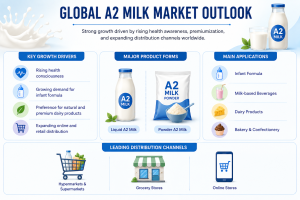
The global A2 milk market size is calculated at USD 2.86 billion in 2025 and is predicted to increase from USD 3.19 billion in 2026 to approximately USD 8.35 billion by 2035, at a CAGR of 11.31% from 2026 to 2035. The rising awareness about health and well-being, increasing health consciousness among the population, and growing usage of A2 milk in infant formula are expected to drive the growth of the A2 milk market during the forecast period.
What is A2 Milk?
A2 milk is produced by cows that naturally contain only the A2 type of beta-casein protein. Traditional cow’s milk generally contains both A1 and A2 beta-casein proteins, whereas A2 milk is sourced from selected breeds such as Gir, Sahiwal, Red Sindhi, Guernsey, and Jersey cows that naturally produce only the A2 protein.
During digestion, A1 protein may release a peptide known as beta-casomorphin-7 (BCM-7), which some studies suggest may contribute to digestive discomfort in certain individuals. In contrast, A2 milk does not produce this peptide during digestion, making it a preferred alternative for consumers who experience mild digestive issues with regular milk but are not lactose intolerant. Although scientific research continues to evaluate these benefits, consumer demand for A2 milk has grown rapidly due to its perceived digestive advantages.
Get Sample: https://www.precedenceresearch.com/sample/1232
A2 Milk Market Overview
The A2 milk market has evolved from a niche premium dairy category into one of the fastest-growing segments within the global dairy industry. Consumers are becoming increasingly selective about the nutritional value and origin of the foods they consume. This shift has encouraged dairy companies to develop innovative A2 milk products and expand their production capacities.
The market includes a wide range of products such as fresh liquid milk, milk powder, yogurt, cheese, butter, ghee, flavored milk, ice cream, protein beverages, and infant formula. Increasing investments in dairy infrastructure, organized retail, cold-chain logistics, and digital distribution channels continue to support market expansion.
Market Challenges
Despite strong growth prospects, several challenges continue to affect market expansion.
- Premium Pricing: A2 milk generally costs more than conventional milk because of selective breeding, specialized herd management, and limited production volumes. The higher price can restrict adoption among cost-sensitive consumers.
- Limited Consumer Awareness: Although awareness is increasing, many consumers still do not fully understand the differences between A1 and A2 proteins. Manufacturers must continue investing in consumer education and marketing initiatives.
- Scientific Debate: While many consumers report improved digestion with A2 milk, scientific evidence regarding its health benefits remains under investigation. Companies must ensure that marketing claims comply with regulatory guidelines and are supported by credible research.
- Supply Chain Limitations: Maintaining separate A2 cattle herds, ensuring product traceability, and preserving milk quality throughout transportation require significant investments in dairy infrastructure and cold-chain logistics.
The Role of Technology in A2 Milk Production
Technological advancements are helping dairy farmers identify and breed cows that naturally produce A2 milk. Genetic testing technologies allow farmers to verify the protein profile of cattle and improve herd management practices.
Advanced dairy farming technologies, including automated milking systems, livestock monitoring, and data analytics, are also helping improve productivity and milk quality while reducing operational costs.
Increasing Demand for Premium Dairy Products
Consumers are becoming more willing to pay higher prices for products that offer superior quality, nutritional benefits, and enhanced consumer experiences. This trend has created significant opportunities for premium dairy categories such as A2 milk.
Premiumization is particularly evident among urban consumers, young professionals, and families seeking healthier food options. As disposable incomes continue to rise globally, premium dairy products are expected to experience sustained demand.
The Growing Popularity of A2 Milk in Infant Nutrition
Infant nutrition remains one of the most promising application areas for A2 milk. Parents are increasingly seeking high-quality nutritional products that support healthy growth and development.
The demand for premium infant formula products is particularly strong in Asia-Pacific countries, where rising incomes and increasing health awareness are encouraging spending on specialized nutrition products.
Read More: Automotive RADAR Market
Market Segmentation
By Product Type
The A2 milk market is segmented into liquid milk, powdered milk, yogurt, cheese, butter, ghee, infant formula, and other value-added dairy products.
Liquid A2 milk dominates the market due to its widespread household consumption, while powdered milk is experiencing rapid growth because of its longer shelf life and increasing use in infant nutrition and food processing.
By Distribution Channel
The market reaches consumers through supermarkets, hypermarkets, convenience stores, specialty health stores, online grocery platforms, direct-to-consumer subscription services, and foodservice providers.
Among these, online retail is witnessing the fastest growth due to changing shopping habits and increasing demand for home delivery.
Regional Analysis
Asia Pacific
Asia Pacific dominates the global A2 milk market owing to its large dairy-consuming population, rising disposable incomes, expanding middle-class population, and strong demand for premium infant nutrition.
Countries including India, China, Australia, and New Zealand continue to lead regional production and consumption.
North America
Growing consumer preference for clean-label, organic, and minimally processed foods is supporting rapid growth across North America. Increasing awareness of digestive wellness and premium dairy nutrition continues to drive market expansion.
Europe
Europe remains a mature dairy market with increasing demand for sustainable farming, functional foods, and organic dairy products. Manufacturers are investing in premium branding and environmentally responsible production methods.
Latin America
Improving retail infrastructure, rising healthcare awareness, and increasing consumer spending on premium nutrition are creating significant opportunities across Latin America.
Middle East & Africa
Urbanization, improving living standards, and expanding organized retail are gradually increasing demand for premium dairy products across the Middle East and Africa.
Future of the A2 Milk Market
The future of the A2 milk market looks highly promising as consumers continue to prioritize health, nutrition, and digestive wellness. Increasing awareness of A2 milk benefits, expanding product portfolios, and growing demand for premium infant nutrition products are expected to drive long-term growth.
Advancements in dairy genetics, improvements in global distribution networks, and investments in sustainable farming practices will further strengthen the market. As accessibility and consumer awareness improve, A2 milk is expected to become an increasingly mainstream choice within the global dairy industry.
𝐘𝐨𝐮 𝐜𝐚𝐧 𝐩𝐥𝐚𝐜𝐞 𝐚𝐧 𝐨𝐫𝐝𝐞𝐫 𝐨𝐫 𝐚𝐬𝐤 𝐚𝐧𝐲 𝐪𝐮𝐞𝐬𝐭𝐢𝐨𝐧𝐬, 𝐩𝐥𝐞𝐚𝐬𝐞 𝐟𝐞𝐞𝐥 𝐟𝐫𝐞𝐞 𝐭𝐨 𝐜𝐨𝐧𝐭𝐚𝐜𝐭 𝐮𝐬 𝐚𝐭 𝐬𝐚𝐥𝐞𝐬@𝐩𝐫𝐞𝐜𝐞𝐝𝐞𝐧𝐜𝐞𝐫𝐞𝐬𝐞𝐚𝐫𝐜𝐡.𝐜𝐨𝐦

- Nootropics Market Size to Lead USD 80.39 Billion by 2035 - June 29, 2026
- A2 Milk Market Size to Attain USD 8.35 Billion by 2035 - June 29, 2026
- Medical Device Testing Market Size to Touch USD 25.82 Billion by 2035 - June 22, 2026