
Case Study: Gogoro Inc. Accelerating Urban EV Adoption Through Smart Battery Swapping and Leasing
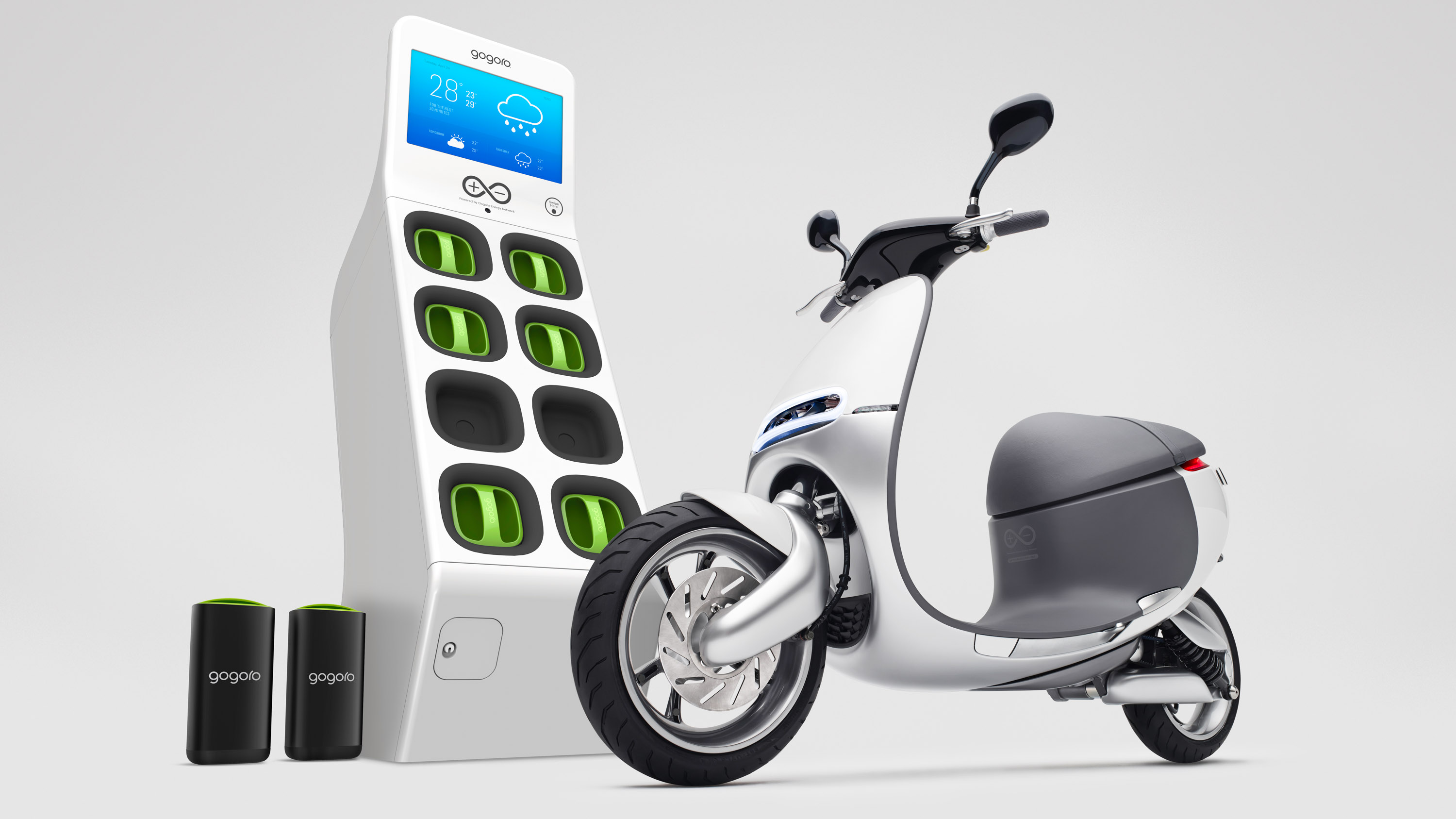
Headquarters: Taipei, Taiwan
Offering: Smart Battery Swapping and Leasing Network
As electric mobility expands beyond passenger cars, two-wheelers have become the driving force of urban electrification—especially in Asia, where scooters and motorcycles dominate city transport. Yet one major challenge persists: long charging times and range limitations that hinder scalability for high-frequency urban commuters.
Enter Gogoro Inc., a Taiwanese innovator that has revolutionized how electric scooters are powered, maintained, and monetized. By combining battery swapping, cloud-based energy management, and subscription-based leasing, Gogoro has built an ecosystem that makes sustainable mobility both accessible and profitable.
In 2025, Gogoro made a decisive move into one of the world’s largest two-wheeler markets—India—through a strategic partnership with Hero MotoCorp, the country’s leading motorcycle manufacturer. This partnership became a cornerstone case study in how Battery-as-a-Service (BaaS) models can rapidly accelerate EV adoption in emerging markets.
Detailed Case Study
In early 2025, Gogoro and Hero MotoCorp launched a joint venture to develop a smart battery swapping and leasing network across India’s top metropolitan regions, including Delhi, Bengaluru, Mumbai, Chennai, and Pune.
The collaboration was part of a shared vision: to eliminate range anxiety and reduce the financial burden of EV ownership by replacing the traditional charging model with a seamless, subscription-based energy service.
Under this partnership, Gogoro deployed over 2,000 battery swapping stations—known as Gogoro GoStations—strategically located near residential zones, retail centers, and key traffic intersections. These stations allowed users to swap depleted batteries in less than 60 seconds, effectively removing the need for home charging or long wait times.
Each GoStation was integrated into Gogoro’s Energy Network Cloud, an AI-powered platform that connected every scooter, battery, and station in real-time. The system monitored charging patterns, predicted demand surges, and automatically balanced power distribution across the network to maximize efficiency.
Hero MotoCorp introduced new electric scooter models compatible with Gogoro’s smart batteries, providing users with performance, flexibility, and predictable running costs. Instead of buying a battery, riders could now lease unlimited access to fully charged batteries through a fixed monthly plan of ₹1,200 (≈USD 14.50).
This “Energy Subscription” model turned the battery into a service rather than a product, drastically reducing the upfront purchase price of e-scooters—making them 25–30% cheaper than conventional models.
The system worked seamlessly:
-
Users downloaded the Gogoro App, linked their scooter ID, and could locate nearby swap stations.
-
The app provided real-time data on available charged batteries and allowed automatic billing via digital wallets.
-
Each swap took under a minute, with the depleted battery inserted into the station for recharging, while users received a fresh, fully charged one.
This approach solved two critical problems for Indian EV users: charging time and accessibility. In densely populated cities with limited home charging options, Gogoro’s swapping infrastructure became a game changer.
Outcome
The impact of Gogoro’s India entry was immediate and measurable. Within six months of launch, more than 100,000 users subscribed to the service, marking one of the fastest adoptions of EV infrastructure in India’s mobility sector.
Fleet operators and delivery services, including companies like Zomato, Swiggy, and Delhivery, integrated Gogoro’s subscription plans into their urban logistics operations. This not only reduced downtime but also optimized cost predictability for high-mileage fleets.
The initiative led to a significant reduction in e-scooter downtime, allowing users to maximize daily usage without range concerns. With each swap taking less than a minute, riders could complete 15–20% more deliveries per day, increasing earnings for delivery workers and improving operational efficiency for fleet companies.
Environmentally, the model supported India’s clean energy and zero-emission targets. By replacing conventional petrol scooters, Gogoro’s network helped offset thousands of tons of CO₂ emissions annually.
Gogoro’s success also positioned India as a key hub for battery swapping innovation, setting the stage for exports of its modular infrastructure model to Southeast Asia and Africa.
Protectional (Technological and Operational Safeguards)
A defining aspect of Gogoro’s success lies in its proactive protectional systems that ensure reliability, data integrity, and user safety.
Every battery swap is secured with end-to-end encryption and multi-level authentication. Each transaction—battery ID, scooter ID, and user credentials—is verified through a blockchain-like record stored on Gogoro’s Energy Network. This eliminates unauthorized swaps or fraudulent activity.
Additionally, Gogoro employs predictive AI algorithms that monitor each battery’s temperature, charge cycles, and usage history. This enables early detection of degradation or faults, preventing potential overheating and ensuring optimal safety.
The GoStations themselves are equipped with smart cooling and fire-suppression systems, compliant with both Taiwan and India’s EV battery safety standards. The system’s remote diagnostics allow Gogoro engineers to detect anomalies instantly and take corrective actions without manual intervention.
On the energy management side, the Gogoro Energy Cloud dynamically redistributes charging loads across the network, preventing grid overloads and optimizing renewable energy utilization during off-peak hours.
These advanced safeguards created an ecosystem of trust among users, regulators, and partners—making Gogoro’s model not only technologically sound but also scalable and policy-compliant.
Impact of the Market
The Gogoro–Hero MotoCorp partnership had a ripple effect across the Indian and Southeast Asian EV markets.
By proving that battery swapping can be both profitable and scalable, the model inspired a new wave of investment and policymaking. India’s Ministry of Heavy Industries, recognizing Gogoro’s success, incorporated battery-swapping guidelines into its FAME II policy revisions, offering incentives to operators adopting interoperable battery standards.
Local startups began adopting Gogoro’s interoperable framework, leading to collaborations across OEMs (Original Equipment Manufacturers) and energy infrastructure providers. This cross-industry alignment accelerated the deployment of EVs, particularly in shared and last-mile mobility.
In Southeast Asia, Gogoro replicated the model through partnerships with energy companies in Thailand and the Philippines, positioning itself as a regional leader in smart energy mobility infrastructure.
The market also witnessed a psychological shift: consumers began viewing energy access as a service subscription, rather than a hardware dependency. This paradigm reshaped the economics of EV ownership and opened new business models for automakers and utilities alike.
Financial After Implementation
Financially, the 2025 expansion into India proved highly rewarding for Gogoro. The company reported a 27% year-over-year increase in subscription revenue, fueled primarily by recurring income from energy leasing plans.
The India rollout alone contributed nearly USD 60 million in new revenue streams by Q4 2025, accounting for roughly 18% of Gogoro’s total annual energy network revenue.
Operational efficiency also improved significantly. As utilization rates of swap stations increased, the cost per swap dropped by nearly 15%, further enhancing profitability.
The partnership with Hero MotoCorp not only provided a ready distribution channel for Gogoro’s batteries but also minimized capital expenditures through shared infrastructure and government-backed incentives.
This model allowed Gogoro to sustain long-term cash flow predictability, enabling it to reinvest in expanding its network and R&D capabilities. The company also attracted additional venture capital and sovereign fund interest, positioning itself for further market expansion across Asia-Pacific.
By the end of 2025, Gogoro’s global energy network exceeded 600,000 active subscribers and 500 million cumulative swaps, reinforcing its reputation as a pioneer of smart battery ecosystems.
Conclusion
Gogoro’s 2025 collaboration with Hero MotoCorp is a landmark example of how strategic partnerships, subscription-based energy models, and technology integration can overcome EV adoption barriers in emerging markets.
By merging speed, safety, and scalability, Gogoro turned battery swapping from a concept into a commercially successful infrastructure backbone. Its model empowered riders with affordability and flexibility while enabling cities to transition toward cleaner transportation ecosystems.
Through its AI-powered network, encrypted infrastructure, and data-driven energy management, Gogoro demonstrated that the future of urban mobility lies not in battery ownership—but in energy-as-a-service.
This case study underscores a broader industry transformation: where innovation meets accessibility, and sustainability meets profitability. As Gogoro expands its blueprint across Asia and beyond, it continues to redefine what it means to power the future of smart mobility.
Dive into the full analysis here: https://www.precedenceresearch.com/battery-leasing-as-a-service-market
You can place an order or ask any questions. Please feel free to contact us at sales@precedenceresearch.com |+1 804 441 9344

- ESG Software Market 2025: Comprehensive Key Players Ecosystem and Revenue Outlook - May 20, 2026
- ESG Software Market Worth Around USD 31.96 Billion by 2035 - May 20, 2026
- Hematopoietic Stem Cell Transplantation Market Size to Attain USD 24.32 Billion by 2035 as Precision Medicine and AI Reshape Blood Cancer Treatment - May 20, 2026
