
Air Freight Forwarding System Market Size to Cross USD 13.61 Billion by 2034, Driven by E-Commerce, AI, and Global Trade Upsurge
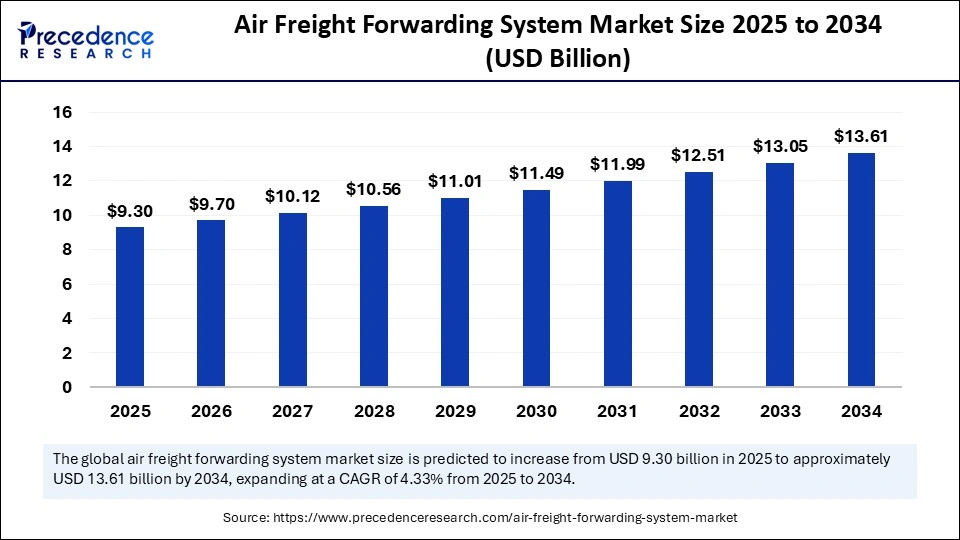
The global air freight forwarding system market is poised for a significant transformation: from a robust USD 9.30 billion valuation in 2025, it is projected to surge to approximately USD 13.61 billion by 2034, marking a CAGR of 4.33% over the forecast period. Advancements in digitalization, expanding international trade volumes, and the explosive rise of e-commerce are steering this market toward unprecedented efficiencies and innovation.
The air freight forwarding system sector is gaining momentum as worldwide logistics shift toward faster, smarter solutions. Increased reliance on advanced technologies, driven by stakeholder demand for transparency and agility, positions this market for enduring growth. The International Air Transport Association (IATA) forecasts a 5% increase in air cargo traffic for 2024, underlining the need for responsive, technology-powered logistics .
Quick Insights: What’s Driving the Market?
-
The air freight forwarding system market size stands at USD 9.30 billion in 2025, expected to reach USD 13.61 billion by 2034.
-
North America leads the global market, with Asia Pacific identified as the fastest-growing region.
-
Top market participants include Emirates SkyCargo, DHL Global Forwarding, Kuehne + Nagel, FedEx, UPS Supply Chain Solutions, and CEVA Logistics.
-
Freight management software accounts for roughly 35-40% market share due to increased supply chain complexity and real-time visibility demands.
-
Cloud-based/SaaS solutions captured 50% of the market, offering scalability and cost efficiency for operators.
-
U.S. market alone is valued at USD 3.19 billion in 2025, projecting USD 4.75 billion by 2034.
-
Transportation management is the primary service type, delivering efficient international shipments and supporting global trade expansion.
-
The fastest-growing end user segment is e-commerce companies, responding to cross-border delivery demand.
Market Scope
| Report Coverage | Details |
| Market Size in 2025 | USD 9.30 Billion |
| Market Size in 2026 | USD 9.70 Billion |
| Market Size by 2034 | USD 13.61 Billion |
| Market Growth Rate from 2025 to 2034 | CAGR of 4.33% |
| Dominating Region | North America |
| Fastest Growing Region | Asia Pacific |
The Role of AI in Air Freight Forwarding
Artificial intelligence is transforming logistics operations, revolutionizing air freight forwarding efficiency and connectivity. Leading companies deploy AI-based predictive analytics to forecast demand, optimize flight paths, and implement real-time cargo condition and route tracking via IoT sensors. AI-powered automation is driving sector-wide advancements in operational intelligence, fleet optimization, and predictive maintenance, enabling smarter infrastructure and more sustainable logistics strategies across the globe.
Major air cargo operators in regions like the UAE, Europe, and North America are setting new industry standards by investing in AI-based solutions. This intelligent transformation supports accurate demand planning, enhances real-time decision-making, and speeds up customs and documentation processes, which are pivotal in meeting escalating cross-border and e-commerce shipment needs.
Market Growth Factors: What Is Fueling Sector Expansion?
Market expansion is closely linked to soaring global trade volumes 2024’s record $33 trillion trade milestone includes a 10% upsurge in services trade and 2% in goods. This coincides with a notable increase in business e-commerce sales, which jumped nearly 60% from 2016 to 2022. Enhanced logistics digitalization, automation, and the rapid evolution of e-commerce are catalyzing new demand and pushing logistics firms to modernize their air freight forwarding systems.
Are Digitalization and Automation Opening New Opportunities?
Absolutely. The digital economy’s expansion is intensifying the adoption of smart freight forwarding systems. Over 45 billion logistics-related data points are processed annually, and cloud-based platforms now offer actionable analytics to streamline air freight operations. With the widespread implementation of IoT, AI, and cloud solutions, logistics providers are equipped to tackle the challenges of cross-border e-commerce and global supply chain complexity. This opens doors for small and medium-sized enterprises, allowing them to access sophisticated automation tools with minimal IT investment.
Why Are Regulatory and Technological Trends Reshaping the Sector?
Recent advancements in regulatory frameworks as seen in the U.S. EPA’s SmartWay Program, EU Aviation Safety Regulations, and China’s national carbon emissions trading scheme drive focus on environmental performance, safety, and sustainable operations. Simultaneously, operators invest in technological breakthroughs like analytics platforms and automated compliance tools, which expedite cargo handling and ensure regulatory adherence. Innovations in freight management software, fleet expansion, and upgrades at major airports (such as those in Hong Kong and Incheon) further position top players to excel.
What Are the Latest Breakthroughs by Top Companies?
-
Emirates SkyCargo, DHL Global Forwarding, and Kuehne + Nagel are pioneering AI-based automation and establishing new industry benchmarks in the UAE cargo market.
-
FedEx, UPS Supply Chain Solutions, and DHL have expanded capacities through new facilities and fleet upgrades, strengthening North American dominance.
-
Amazon Air and Alibaba have invested in bespoke air forwarding platforms to improve speed and tracking, supporting the rise of high-value e-commerce shipments.
Top companies mentioned: Emirates SkyCargo, DHL Global Forwarding, Kuehne + Nagel, FedEx, UPS Supply Chain Solutions, CEVA Logistics, Amazon Air, and Alibaba.
Regional and Segment Analysis: What Are the Key Areas?
By Region:
-
North America is the largest market, fueled by major hubs and technology adoption.
-
Asia Pacific is rapidly expanding due to rising trade flows, e-commerce surges, and strategic investments in air cargo capacity.
-
Europe, Latin America, Middle East & Africa each play significant roles, supported by unique regulatory and operational focuses.
By Segment:
-
Solution Type: Freight management software is dominant, with analytics platforms rising fastest.
-
Deployment: Cloud-based/SaaS models top due to flexibility; on-premises systems grow for security and compliance.
-
Service Type: Transportation management segment leads; customs clearance and regulatory compliance accelerating with digital tools.
-
End User: Freight forwarding companies hold the largest share; e-commerce businesses are expected to grow fastest.
Air Freight Forwarding System Market Companies
- Panalpina (DHL)
- C.H. Robinson
- UPS Supply Chain Solutions
- FedEx Logistics
- Agility Logistics
- CEVA Logistics
- Geodis
- Hellmann Worldwide Logistics
- Bolloré Logistics
- Yusen Logistics
- Kerry Logistics
- Rhenus Logistics
- Toll Group
- Damco
Get this report to explore global market size, share, CAGR, and trends, featuring detailed segmental analysis and an insightful competitive landscape overview @ https://www.precedenceresearch.com/sample/6970
You can place an order or ask any questions. Please feel free to contact us at sales@precedenceresearch.com |+1 804 441 9344

- ESG Software Market 2025: Comprehensive Key Players Ecosystem and Revenue Outlook - May 20, 2026
- ESG Software Market Worth Around USD 31.96 Billion by 2035 - May 20, 2026
- Hematopoietic Stem Cell Transplantation Market Size to Attain USD 24.32 Billion by 2035 as Precision Medicine and AI Reshape Blood Cancer Treatment - May 20, 2026
