
Case Study: Siemens AG – Revolutionizing Smart Factory Visualization through Industrial Displays
Headquarters: Munich, Germany
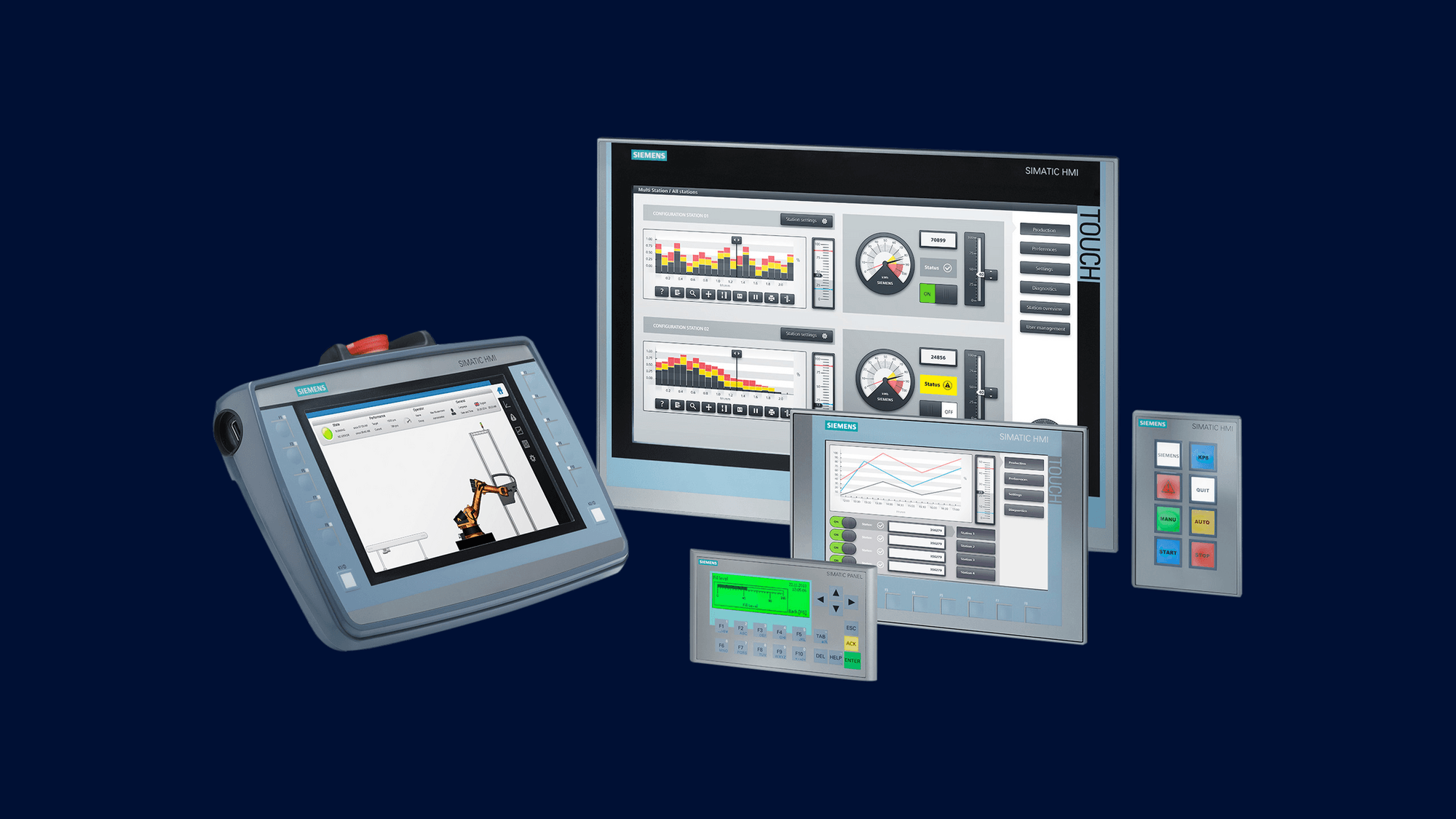
Offering: Siemens SIMATIC Industrial Monitors and Panel PCs
Introduction
Siemens AG, a global technology powerhouse headquartered in Munich, Germany, once again proved its dominance in industrial automation by advancing the next generation of human–machine interface (HMI) technology. The company’s SIMATIC HMI Unified Comfort Panels and Industrial Panel PCs were strategically deployed across Siemens’ flagship Amberg Electronics Plant widely recognized as one of the world’s most digitized manufacturing facilities.
This initiative represented a critical evolution in industrial display technology, integrating powerful visualization tools with edge connectivity, artificial intelligence (AI), and predictive maintenance capabilities. Through this transformation, Siemens not only enhanced its internal manufacturing efficiency but also established new standards for Industry 4.0-driven smart factory environments.
Background: The Need for Next-Gen Visualization
The Amberg plant, known for producing Siemens’ own automation components, operates as a living laboratory for digital manufacturing excellence. With over 1,000 different product variants and millions of process combinations, even minor inefficiencies could impact throughput and operational precision.
By 2024, Siemens identified growing challenges in real-time data interpretation and communication between operators, machines, and control systems. The company sought to overcome issues such as:
-
Delayed troubleshooting due to non-integrated interfaces
-
Limited visual analytics for predictive maintenance
-
Human–machine interaction gaps affecting production speed
-
Increased complexity in managing diverse automation networks
To address these challenges, Siemens decided to deploy a new generation of SIMATIC Industrial Displays that would merge interactive visualization with edge computing intelligence — forming the digital nerve center of its smart factory ecosystem.
Implementation: Integrating SIMATIC Displays into the Amberg Smart Factory
The project’s implementation began in early 2025, with Siemens rolling out its SIMATIC HMI Unified Comfort Panels and Industrial Panel PCs across multiple production cells. These devices featured multi-touch, high-resolution displays, energy-efficient processors, and native connectivity to the TIA (Totally Integrated Automation) Portal Siemens’ software backbone for industrial automation.
Each display served as a real-time operational dashboard, visualizing key process data from PLCs (Programmable Logic Controllers), sensors, and machine learning modules running at the edge.
The system architecture is integrated:
-
Edge computing nodes to process data locally for latency-free monitoring
-
Cloud synchronization through MindSphere (Siemens’ industrial IoT platform)
-
AI-powered predictive analytics to forecast equipment wear and process anomalies
-
User-customized HMI layouts enabling operators to intuitively interact with production parameters
By embedding these intelligent displays within assembly lines, Siemens transformed the Amberg facility into a fully visualized, self-monitoring production ecosystem.
Operational Transformation: Human–Machine Synergy
The deployment marked a pivotal shift in how Siemens approached human–machine collaboration. Traditional industrial displays often served as passive data panels; however, the new SIMATIC systems introduced contextual interaction, allowing operators to manipulate, analyze, and respond to live production data through an intuitive multi-touch interface.
The panels featured 4K visual clarity for enhanced readability, especially in complex assembly environments. Operators could instantly identify deviations, access detailed diagnostics, and initiate corrective workflows without escalating to centralized systems.
This level of autonomy significantly improved decision-making and responsiveness. Maintenance engineers, for example, could visualize vibration, temperature, and current data directly on the display—triggering automated service tickets for preventive actions before faults occurred.
Outcome: Quantifiable Efficiency and Productivity Gains
Within the first operational quarter of deployment, Siemens recorded measurable improvements in plant efficiency and reliability.
Key outcomes included:
25% faster troubleshooting in assembly lines — enabled by instant access to diagnostic and sensor data through real-time visualization.
18% reduction in unplanned downtime — due to predictive alerts generated from display-integrated analytics.
Enhanced operator productivity — resulting from a more intuitive, multi-touch interface and reduced information overload.
10% improvement in energy efficiency — achieved through optimized machine utilization and load balancing informed by continuous visual feedback.
These gains were not merely technical but strategic, underscoring the tangible ROI of smart visualization systems in industrial automation.
Protectional Measures: Cybersecurity and Durability
Siemens ensured that its industrial displays adhered to the highest standards of physical durability and cybersecurity.
Each unit featured an IP65-rated enclosure, offering resistance to dust, oil, and humidity, essential for high-demand manufacturing environments. Moreover, Siemens integrated advanced cyber protection using its TIA Portal secure communication layer, which employed end-to-end encryption, role-based access control, and secure network isolation.
This dual protection physical and digital made Siemens’ HMI infrastructure resilient against both environmental and cyber threats, a crucial factor as industrial systems increasingly interface with cloud and IoT networks.
Impact on the Industrial Display Market
The success of Siemens’ internal deployment had ripple effects across the global Industrial Display Market in 2025. By demonstrating how industrial-grade visualization could merge with AI-driven analytics and IoT integration, Siemens redefined the role of displays from static panels to dynamic intelligence hubs.
This project inspired several OEMs, automation integrators, and manufacturing firms to adopt interactive, networked display systems as part of their digital transformation strategies. The market began to shift toward demand for:
-
High-resolution, energy-efficient HMI systems
-
Edge-AI integrated display platforms
-
Cyber-secured visualization solutions
As a result, Siemens positioned itself not only as a technology vendor but as a thought leader driving industrial display innovation, particularly in smart factory modernization and Industry 4.0 deployments.
Financial Impact: Tangible Returns on Investment
Following the full-scale integration of SIMATIC Industrial Displays, Siemens reported an estimated annual operational cost saving of USD 10 million.
The savings were attributed to:
-
Reduced machine downtime (accounting for approximately 40% of cost reduction)
-
Optimized energy consumption through data-driven insights
-
Improved worker efficiency and lower error rates
-
Reduced maintenance overheads due to predictive servicing
In addition, Siemens achieved a 15% improvement in production output per shift, translating into higher throughput without additional resource investments.
These results validated the company’s strategy of investing in visualization technologies as a cornerstone for sustainable and intelligent manufacturing.
Conclusion: Setting a Global Benchmark for Smart Visualization
The Siemens Amberg case stands as a landmark example of how industrial display technology can serve as a catalyst for digital transformation. By merging robust hardware with intelligent software and edge analytics, Siemens showcased the power of visualization to bridge the gap between humans and machines.
The success of the project strengthened Siemens’ reputation as a pioneer in industrial automation, while simultaneously influencing the global trajectory of the industrial display market. Manufacturers worldwide began to recognize displays not just as output devices but as strategic enablers of operational intelligence.
In essence, Siemens’ 2025 initiative transformed the role of the display from a passive monitor to an active interface of industrial innovation setting a blueprint for future smart factories that are not only connected but cognitively aware.
Dive into the full analysis here: https://www.precedenceresearch.com/industrial-display-market

- ESG Software Market 2025: Comprehensive Key Players Ecosystem and Revenue Outlook - May 20, 2026
- ESG Software Market Worth Around USD 31.96 Billion by 2035 - May 20, 2026
- Hematopoietic Stem Cell Transplantation Market Size to Attain USD 24.32 Billion by 2035 as Precision Medicine and AI Reshape Blood Cancer Treatment - May 20, 2026
