
Antimycotics Market Size to Reach USD 25.04 Billion by 2034, Driven by Rising Fungal Infections and Innovative Therapies
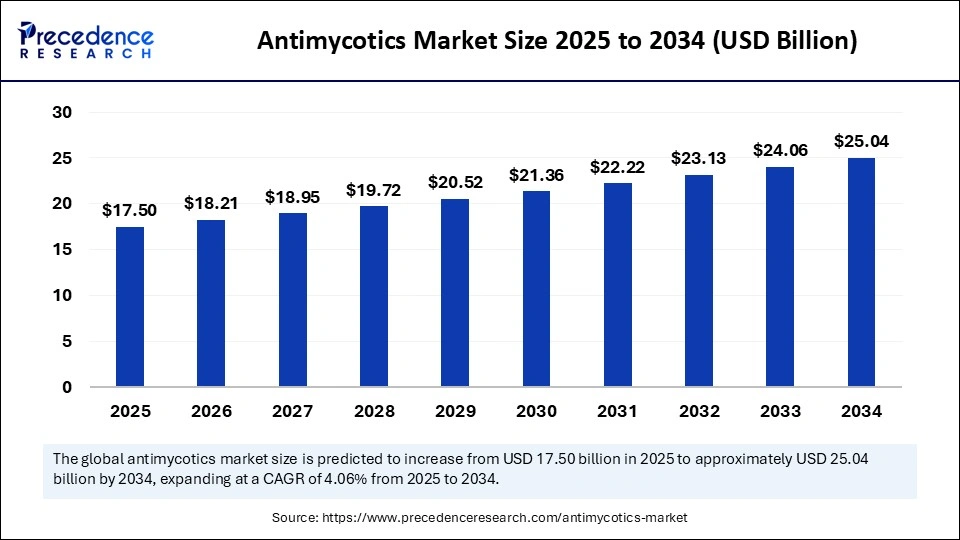
The global antimycotics market is expected to grow steadily at a CAGR of 4.06% from 2025 to 2034, with valuation increasing from USD 17.50 billion in 2025 to USD 25.04 billion by 2034. This growth is propelled by the surge in fungal infections worldwide, the expanding elderly and immunocompromised population, and advances in antifungal treatments and diagnostics.
What is the Antimycotics Market’s Growth Outlook?
The antimycotics market is expanding due to increasing demand for novel therapies that address systemic and superficial fungal infections. The rise in immunosuppressive conditions, hospital-acquired infections, and drug-resistant fungi are key drivers. Antifungal drugs, especially azoles and polyenes, see growing adoption fueled by technological innovations and improved diagnosis methods that enable faster and more effective treatments.
Antimycotics Market Key Insights
-
The market was valued at USD 17.50 billion in 2025 and forecasted to reach USD 25.04 billion by 2034 at a CAGR of 4.06%.
-
North America led the market in 2024, accounting for 43.8% of the total share.
-
The azoles drug class dominated with a 40.5% share, while polyenes are expected to grow the fastest at a CAGR of 4.2%.
-
Systemic infections comprised 65.5% of the market, with the superficial infections segment projecting the fastest growth.
-
Oral administration accounted for 55.5% of usage, whereas injectable formulations show the highest growth rate.
-
Hospitals represent the largest end-user segment with 45.5%, while specialty clinics are expanding rapidly.
Revenue and Market Size Breakdown
| Parameter | 2025 (USD Billion) | 2026 (USD Billion) | 2034 Forecast (USD Billion) | CAGR (2025-2034) |
|---|---|---|---|---|
| Market Value | 17.50 | 18.21 | 25.04 | 4.06% |
How is Artificial Intelligence Impacting the Market?
AI integration in the antimycotics market is enhancing diagnostic accuracy and speeding early detection of fungal infections. Molecular assays powered by AI enable quicker identification of pathogens, improving treatment timelines and outcomes. Additionally, AI-driven drug discovery accelerates antifungal compound development, helping address resistant fungal strains more effectively.
AI-assisted clinical decision support tools also optimize antifungal therapy by predicting patient response and minimizing side effects, fostering personalized medicine approaches. These technological advancements are vital to tackling rising antifungal resistance and expanding treatment accessibility globally.
What Are the Key Drivers of Market Growth?
Market expansion stems from increasing fungal infection incidences, especially systemic infections among immunocompromised populations. Advances in drug formulation, such as lipid-based polyenes, reduce toxicity and improve patient safety, encouraging wider clinical use. Growing awareness of fungal diseases and supportive government policies are enhancing treatment adoption worldwide.
The development of topical and extended-release antifungals improves patient compliance, while rapid diagnostic tests allow prompt interventions. R&D investments targeting drug resistance and unmet medical needs further stimulate innovation and market growth.
What Opportunities and Trends Are Emerging in Antimycotics?
Are new antifungal drug classes shaping the market future?
novel compounds like echinocandins and immunomodulatory agents are gaining traction to tackle resistant fungal strains and invasive infections, opening new treatment avenues.
How is regional growth shaping market dynamics?
North America leads in market share due to high R&D and healthcare infrastructure, while Europe shows the fastest growth, propelled by rising infection rates and supportive policies. Asia-Pacific presents significant potential with expanding healthcare systems, increasing fungal infection awareness, and affordability-driven treatments.
Are startups influencing innovation?
Emerging biotech companies such as F2G and Zero Candida drive innovation through venture funding and partnerships, focusing on the development of next-generation antifungal molecules and delivery systems.
What Challenges and Cost Pressures Exist?
High R&D costs and regulatory hurdles delay antifungal drug development. Antifungal resistance threatens treatment effectiveness, necessitating costly innovation. Market access in developing countries is constrained by pricing pressures and limited diagnostic infrastructure, hindering optimal care delivery globally.
Market Segmentation Analysis
-
Drug Class: Azoles dominate (40.5% share), followed by fast-growing polyenes due to their efficacy against resistant strains.
-
Infection Type: Systemic infections lead (65.5%), but superficial infections grow rapidly due to rising skin and nail fungal infections.
-
Indication: Candidiasis is most prevalent (65.5%), while dermatophytosis cases grow, driven by increased treatment awareness.
-
Route of Administration: Oral antifungals hold majority usage (55.5%) for convenience and efficacy; injectable forms grow fastest for critical care.
-
End User: Hospitals constitute the largest segment (45.5%); specialty clinics are expanding, reflecting increased outpatient care demand.
What Are the Latest Breakthroughs and Key Companies?
In 2025, Propedix launched Dryello, an innovative dry-stick antifungal for athlete’s foot, enhancing patient convenience. The WHO’s first antifungal pipeline review in April 2025 highlights clinical and preclinical developments shaping this space.
Leading companies
- Pfizer
- Merck
- Novartis
- Bayer
- Johnson & Johnson
- Gilead Sciences
- Sanofi
- AbbVie
- Bristol-Myers Squibb
- GSK
- Astellas
- Eli Lilly
- Mylan
Get this report to explore global market size, share, CAGR, and trends, featuring detailed segmental analysis and an insightful competitive landscape overview @ https://www.precedenceresearch.com/sample/7065
You can place an order or ask any questions. Please feel free to contact us at sales@precedenceresearch.com |+1 804 441 9344

- Battery Swapping Market Size to Touch USD 24.74 Billion by 2035 - March 5, 2026
- Dental Air Polishing System Market Size to Reach USD 1603.54 Million by 2035 - March 4, 2026
- Cryoballoon Ablation System Market Size to Surpass USD 2.49 Billion by 2035, Propelled by 5.70% Growth in Minimally Invasive Cardiac Care - March 2, 2026
