
Case Study: General Motors × FANUC – Automating Body Plug Insertion with Vision-Guided Robotic Arms
In the evolving landscape of automotive manufacturing, the integration of robotic automation has become a key lever for enhancing precision, safety, and operational efficiency. One of the most remarkable examples of this transformation comes from the collaboration between General Motors (GM) and FANUC, where the automaker reimagined a traditionally manual and ergonomically challenging process — body plug insertion through advanced robotics and vision technology.
While body plug installation might appear to be a small task in the grand scheme of vehicle assembly, it represents the kind of repetitive, labor-intensive, and precision-critical process that defines much of modern manufacturing. FANUC’s automation of this process for GM stands as a testament to how robotics can effectively address both human-centered and performance-driven challenges in industrial environments.
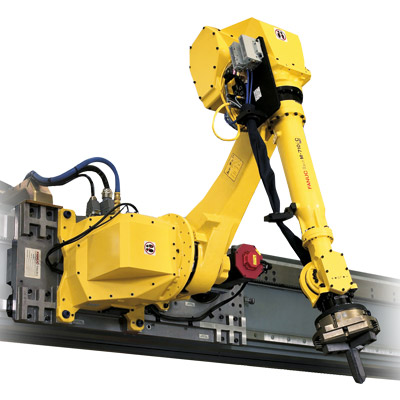
Company Overview
Robot Supplier: FANUC Corporation
Headquarters: Oshino, Japan
Global Operations: FANUC America, FANUC Europe, FANUC China
Offering: Industrial robotic arms (M-Series) equipped with integrated vision, error-proofing, and verification systems
Founded in 1956, FANUC has been a global leader in factory automation and industrial robotics. Known for its precision engineering, reliability, and integration of AI-driven control systems, FANUC serves diverse industries ranging from automotive and electronics to aerospace and logistics. Its M-series industrial robots — utilized in GM’s body plug automation — are designed for compact workspaces and precision assembly, making them ideal for repetitive, accuracy-dependent tasks.
The Challenge: Repetitive and Ergonomically Difficult Manual Insertion
In GM’s automotive body shop, one specific task posed consistent challenges — the manual installation of body plugs. These small plastic inserts and grommets are used to seal holes in the car body after welding or painting. While seemingly simple, the process required workers to bend, twist, and reach into difficult positions to insert plugs into multiple cavities along the vehicle’s frame.
This not only caused ergonomic strain and potential injuries but also led to variability in accuracy. Misinserted or improperly fitted plugs could lead to sealing failures, water leaks, or acoustic issues — all of which compromise vehicle quality.
As vehicle designs became more complex and the number of body plugs increased per unit, GM recognized the need for an automated solution that could:
-
Reduce ergonomic risks for line operators,
-
Maintain consistent quality and precision,
-
Operate efficiently within tight assembly spaces, and
-
Integrate seamlessly into existing production lines.
These objectives laid the foundation for GM’s collaboration with FANUC to develop a vision-guided robotic insertion cell.
The Solution: FANUC’s Vision-Enabled Robotic Arm System
FANUC designed an automation cell leveraging its M-Series industrial robotic arm paired with advanced vision systems and error-proofing capabilities. The robots were configured to mimic human dexterity while maintaining the precision and repeatability that manual operations often lack.
The system works as follows:
-
Identification and Pick-Up: Using integrated 2D and 3D vision sensors, the robot identifies and picks the correct type of body plug from a feeder tray.
-
Positioning and Orientation: The robot adjusts the plug orientation in real-time to align perfectly with the insertion point, regardless of body panel variations or lighting conditions.
-
Insertion and Verification: With controlled force and position sensing, the robot inserts the plug into the cavity and verifies successful insertion through force feedback and visual confirmation.
-
Error-Proofing: The system automatically detects missing plugs, misalignment, or incorrect placement and triggers corrective action — ensuring zero-defect assembly.
This approach effectively combined robotics, vision intelligence, and quality control in a single integrated cell. FANUC’s system was designed to occupy minimal floor space and could easily be reprogrammed for different vehicle models or plug types, offering long-term flexibility for GM’s production environment.
Outcome: Enhanced Safety, Efficiency, and Quality
The deployment of FANUC’s automation system led to a series of notable outcomes across GM’s production line:
-
Improved Worker Safety and Ergonomics:
By automating a physically demanding and repetitive task, GM significantly reduced the risk of musculoskeletal strain among its assembly line operators. Workers were reassigned to more value-added roles such as quality inspection and process supervision. -
Increased Precision and Quality:
The vision-based insertion system minimized human error and variability. With automated verification, the likelihood of missing or incorrectly placed plugs dropped to near zero — ensuring consistent vehicle sealing and improved final product quality. -
Maintained or Improved Throughput:
Despite the complexity of automation integration, the robotic system operated at equal or faster cycle times compared to manual insertion. Continuous 24/7 operation enabled higher uptime and steady output without fatigue-induced slowdowns. -
Ease of Integration:
The robotic cells were seamlessly integrated into GM’s existing production line architecture with minimal downtime. FANUC’s flexible programming allowed for adjustments when new car models were introduced.
Protectional Features and Safety Compliance
FANUC’s robotic solution was developed with safety and reliability as top priorities. The system incorporated:
-
Vision-guided path correction to avoid collision with vehicle frames or fixtures;
-
Force-torque sensors for real-time feedback, ensuring the right insertion pressure;
-
Redundant error-proofing checks to detect incomplete or incorrect insertions;
-
Safety-certified programming architecture, meeting ISO 10218-1 standards for industrial robot operation.
These measures ensured that the automation cell operated safely alongside human operators while maintaining reliability in confined, complex body shop environments.
Impact on the Market: A Blueprint for Small-Component Automation
The GM–FANUC project became an important benchmark for how low-complexity yet critical tasks can be effectively automated. Traditionally, manufacturers prioritized robotics for heavy or hazardous applications such as welding, painting, and material handling. However, this case demonstrated that even micro-level assembly processes — like plug insertion — could yield substantial value when automated.
It also inspired a shift in thinking across the automotive and manufacturing industries. Companies began exploring automation for small, ergonomically challenging, and precision-dependent operations that had previously been deemed unsuitable for robots. The result was a new wave of “micro-automation” adoption in automotive plants across North America and Asia.
Furthermore, the success of this project underscored FANUC’s growing influence in collaborative robotics, where safety, adaptability, and smart vision are equally important as speed and payload capacity.
Financial and Operational Gains
While GM did not publicly disclose exact financial figures or ROI for this specific project, the qualitative benefits were substantial. The company observed:
-
A significant reduction in labor-related injuries, resulting in lower worker compensation costs;
-
Improved productivity and lower rework rates due to consistent quality;
-
Reduced defect rates, leading to fewer warranty claims and improved customer satisfaction;
-
Enhanced long-term process stability with less downtime and variability.
Industry analysts estimate that such automation projects typically yield ROI within 18–24 months, depending on plant size and process complexity. For GM, the value extended beyond cost savings, it strengthened its reputation for innovation, employee safety, and operational excellence.
Conclusion: Redefining the Role of Robotics in Automotive Assembly
The collaboration between General Motors and FANUC showcases the growing sophistication of automation in the automotive sector. It is a clear example of how robotics can bridge the gap between human safety, operational efficiency, and manufacturing precision.
By transforming a small but vital process into a fully automated and quality-assured operation, GM not only improved its production performance but also paved the way for a broader cultural shift in factory automation — one that prioritizes both human well-being and technological excellence.
This case study illustrates that the future of robotics lies not only in heavy-duty automation but also in intelligent, ergonomic, and precision-focused applications that redefine what’s possible on the modern factory floor.
Dive into the full analysis here: https://www.precedenceresearch.com/robotic-arm-market

- Battery Swapping Market Size to Touch USD 24.74 Billion by 2035 - March 5, 2026
- Dental Air Polishing System Market Size to Reach USD 1603.54 Million by 2035 - March 4, 2026
- Cryoballoon Ablation System Market Size to Surpass USD 2.49 Billion by 2035, Propelled by 5.70% Growth in Minimally Invasive Cardiac Care - March 2, 2026
