
Case Study: Zimmer Group’s Electric Grippers Transforming Smartphone Assembly at Foxconn
Zimmer Group Electric Grippers Transform Smartphone Assembly at Foxconn
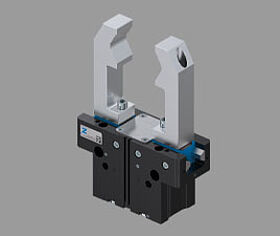
Company Overview
Zimmer Group
-
Headquarters: Rheinau, Germany
-
Offering: Mechatronic grippers, end-of-arm tooling, and advanced automation technology
Zimmer Group is recognized as one of the global pioneers in handling and automation technology, with a strong reputation for delivering precision, durability, and innovation. By 2025, the company had made significant strides in mechatronic gripping solutions designed for human-robot collaboration (HRC), focusing on industries like automotive, aerospace, and electronics.
Project Background
In early 2025, Foxconn, the world’s largest contract electronics manufacturer, faced mounting pressure to optimize its smartphone assembly lines. With global demand for advanced smartphones continuing to surge and device complexity increasing, Foxconn needed solutions that could:
-
Improve throughput to meet massive production volumes.
-
Ensure precision in assembling fragile components such as OLED screens and high-resolution camera modules.
-
Enhance worker safety in human-robot collaborative (HRC) environments.
-
Replace pneumatic grippers with more energy-efficient and adaptable electric alternatives.
Zimmer Group emerged as a strategic partner due to its expertise in electric grippers with fine force control, AI-driven adjustments, and collaborative safety features.
The Solution: HRC-Capable Electric Grippers
Zimmer Group deployed its mechatronic HRC-compatible grippers, specifically designed to work alongside human operators in sensitive production environments. These grippers were integrated into Foxconn’s assembly stations for handling delicate tasks such as:
-
Positioning smartphone screens with micro-level precision.
-
Handling fragile glass panels and camera modules.
-
Performing repeatable yet flexible movements in mixed-model production lines.
Key Features of the Deployed Grippers:
-
Adjustable Force Control: The gripping force could be finely tuned to handle delicate smartphone components without causing scratches, cracks, or misalignment.
-
Collision Detection Systems: Sensors ensured the grippers would stop or retract upon encountering unexpected resistance, preventing both product damage and worker injury.
-
Plug-and-Play Integration: The grippers could be quickly deployed with collaborative robots (cobots) already operating at Foxconn, reducing setup and training time.
-
Data Connectivity: Built-in sensors transmitted real-time performance data to Foxconn’s central monitoring systems, enabling predictive maintenance and operational efficiency.
Implementation Process
The implementation unfolded in three phases:
-
Pilot Phase:
Zimmer installed a limited number of electric grippers in a single Foxconn assembly line in Shenzhen, focused on handling smartphone camera modules. This stage was designed to test precision, adaptability, and human-robot safety interaction. -
Scaling Phase:
After successful trials, the deployment expanded to multiple production lines across Foxconn’s plants in China. Each gripper was paired with cobots, reducing dependency on pneumatic systems and cutting energy costs. -
Optimization Phase:
Continuous data collection from grippers allowed Foxconn to fine-tune workflows. Operators received training to adapt seamlessly to HRC environments, ensuring humans and machines worked side by side without disruptions.
Outcomes Achieved
The Zimmer-Foxconn collaboration yielded measurable performance improvements:
-
Reduced Assembly Errors by 18%:
With adjustable gripping force and precision control, screen and camera misplacements dropped significantly. This not only improved product quality but also minimized rework and wastage. -
Improved Throughput by 25%:
High-volume production lines saw a substantial increase in speed, thanks to the grippers’ ability to handle components efficiently while working collaboratively with humans. -
Enhanced Worker Safety and Efficiency:
Collision detection and HRC compliance ensured that robots and human operators could coexist on the same line. Operators reported fewer workplace incidents and greater trust in automation systems. -
Sustainability Gains:
By replacing energy-intensive pneumatic systems with electric grippers, Foxconn achieved lower operational energy consumption, aligning with sustainability targets.
Protectional Measures
Zimmer’s grippers were engineered with a strong focus on protection—for both workers and products:
-
Collision Detection: Prevented accidents by stopping gripper motion upon detecting unexpected contact.
-
Force Adjustability: Reduced the risk of damaging fragile components, especially sensitive OLED screens and lenses.
-
Fail-Safe Mechanisms: Built-in redundancies ensured uninterrupted operation even in case of minor technical disruptions.
-
Data-Driven Monitoring: Advanced analytics allowed predictive maintenance, minimizing downtime.
These protective features not only safeguarded Foxconn’s production but also reinforced Zimmer’s reputation as a trusted partner in precision automation.
Impact on the Market
The partnership significantly impacted both Zimmer and the broader electric grippers market:
-
Acceleration of Electric Over Pneumatic Transition: The project highlighted the advantages of electric grippers over pneumatic ones, especially in industries requiring precision and energy efficiency.
-
Strengthening Zimmer’s APAC Presence: The collaboration bolstered Zimmer’s footprint in Asia-Pacific, particularly in China, where Foxconn’s endorsement acted as a strong market reference.
-
Catalyst for Industry 4.0 Adoption: The success story demonstrated how HRC-enabled electric grippers could be central to digitalized, AI-driven smart factories.
-
Rising Demand in Electronics Manufacturing: As smartphone makers faced similar challenges globally, Zimmer’s solutions became a template for other electronics manufacturers.
Financial After Implementation
The collaboration proved financially rewarding for both parties:
-
Revenue Growth for Zimmer Group:
The Foxconn partnership generated an estimated USD 150 million in additional revenue in 2025, marking one of Zimmer’s most significant contracts in the electronics sector. -
Market Share Expansion:
Zimmer’s electronics segment market share in Asia-Pacific increased by 9%, cementing its role as a leader in precision automation technology. -
Operational Savings for Foxconn:
Foxconn reported significant cost savings from reduced rework, improved efficiency, and lower energy consumption, with ROI achieved in less than 18 months.
Strategic Takeaways
This case study underscores several key takeaways for the electric grippers market and global manufacturing ecosystem:
-
HRC-Ready Solutions are the Future: As factories evolve toward smart manufacturing, equipment that supports safe collaboration between humans and robots is becoming indispensable.
-
Electronics Manufacturing Demands Precision: With thinner screens, more delicate components, and tighter tolerances, mechatronic grippers are replacing traditional pneumatic systems.
-
Sustainability is a Key Driver: Energy efficiency and reduced waste are now major selling points, making electric grippers essential for eco-conscious manufacturers.
-
Regional Expansion through Strategic Partnerships: Collaborations with global manufacturing leaders like Foxconn can open entire regional markets for automation solution providers.
Conclusion
The Zimmer Group-Foxconn partnership in 2025 exemplifies how innovative gripping technology can transform large-scale manufacturing. By integrating HRC-capable electric grippers into smartphone assembly lines, Zimmer not only solved critical efficiency and quality challenges but also set new standards for precision automation in electronics.
The measurable outcomes—18% fewer assembly errors, 25% improved throughput, safer HRC environments, and USD 150 million in revenue gains—reflect the tangible benefits of advanced mechatronic solutions. Beyond financial success, the project reinforced Zimmer’s global leadership, accelerated the shift toward electric gripping technologies, and reshaped the future of electronics manufacturing in Asia-Pacific.
Ultimately, this collaboration stands as a benchmark case study demonstrating the role of electric grippers in driving Industry 4.0, sustainability, and human-centric automation in one of the world’s most demanding manufacturing environments.
Get More Insights@ precedenceresearch.com

- ESG Software Market 2025: Comprehensive Key Players Ecosystem and Revenue Outlook - May 20, 2026
- ESG Software Market Worth Around USD 31.96 Billion by 2035 - May 20, 2026
- Hematopoietic Stem Cell Transplantation Market Size to Attain USD 24.32 Billion by 2035 as Precision Medicine and AI Reshape Blood Cancer Treatment - May 20, 2026
