
Case Study: Micron Technology – Leading the HBM4 Revolution in 2025
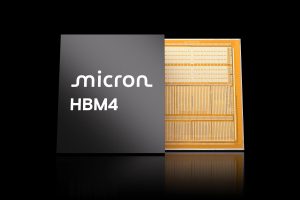
Company Name: Micron Technology, Inc.
Headquarters: Boise, Idaho, USA
Offering: High-Bandwidth Memory (HBM4) Solutions for Artificial Intelligence (AI) and High-Performance Computing (HPC) Systems
Case Study:
In 2025, Micron Technology, Inc. took a major leap in the high-bandwidth memory (HBM) market with the successful introduction of its next-generation HBM4 memory platform. This launch positioned the company as a formidable leader in the rapidly expanding AI infrastructure ecosystem, where memory performance, bandwidth, and energy efficiency define the competitiveness of computing systems.
As artificial intelligence, high-performance computing, and generative AI models such as ChatGPT and Gemini continue to demand exponential data processing speeds, the role of HBM has shifted from being a niche technology to becoming the heartbeat of AI compute architectures. Micron, recognizing this shift early, had already been investing heavily in advanced DRAM node transitions, next-generation packaging, and custom interface logic. These investments culminated in the unveiling of HBM4, which achieved record-breaking bandwidth of 2.8 TB/s, outperforming major rivals such as Samsung Electronics and SK Hynix, and even surpassing the JEDEC-defined baseline of 2 TB/s for this generation.
Micron’s HBM4 is based on 1-gamma DRAM process technology, a node that reduces energy per bit transferred while maintaining extremely high reliability. The company collaborated closely with TSMC, one of the world’s leading semiconductor foundries, to develop a custom CMOS base die — an essential architectural component enabling optimized data routing, power delivery, and interface signaling between stacked DRAM dies and AI accelerators.
Beyond this hardware advancement, Micron’s engineering teams pushed the boundary by introducing HBM4E prototypes, which feature customizable logic dies. These logic layers are designed to allow Nvidia, AMD, and other strategic partners to co-design their accelerators with memory that aligns perfectly to their performance and power efficiency goals. This flexibility allows tighter coupling between compute and memory layers — a key requirement for emerging workloads like large-scale language model training, real-time inferencing, and hyperscale cloud data analytics.
The Technological Breakthrough:
Micron’s HBM4 solution integrates multiple innovations that together set a new industry benchmark for data throughput, energy efficiency, and reliability:
-
1-Gamma DRAM Technology:
The 1-gamma node employs smaller cell structures and advanced patterning, resulting in improved bit density and energy efficiency. It allows Micron to deliver more memory capacity within the same footprint, reducing power consumption per operation. -
Advanced TSV and Packaging:
Through-silicon via (TSV) interconnects have been optimized for signal integrity, latency reduction, and thermal dispersion. The company’s proprietary micro-bump and thermal interface material enhance heat dissipation without compromising stacking density. -
Custom CMOS Base Die:
By designing its own base logic die, Micron achieved greater control over power delivery networks and signal routing, resulting in 25% lower latency compared to HBM3E. This innovation enables faster data exchange between compute cores and memory modules. -
HBM4E Customizable Logic Layer:
The introduction of HBM4E prototypes marked a turning point for the industry — offering system integrators the ability to co-design and optimize the logic layer for their own accelerators. This approach accelerates innovation cycles in AI chip design, especially for training workloads exceeding 1 trillion parameters. -
Enhanced Reliability & Thermal Design:
HBM4 features fault-tolerant interconnects, redundant signal paths, and multi-layer heat spreaders. These ensure consistent performance in high-load AI workloads running in power-dense environments like next-gen data centers.
Outcome:
Micron’s HBM4 delivered 35% higher performance-per-watt and 25% lower latency than its predecessor, HBM3E. These performance metrics were critical in enabling new levels of computational efficiency for AI and HPC customers.
The company’s technology quickly attracted design wins from major GPU and accelerator manufacturers. Partnerships with Nvidia for its next-generation AI GPUs and AMD for HPC workloads were among the most notable outcomes. Additionally, Micron’s HBM4 became an integral part of custom ASICs used by hyperscale cloud providers and AI infrastructure startups focused on large model training.
Through these collaborations, Micron solidified its position not only as a DRAM manufacturer but as a strategic enabler of AI compute performance. The real-world benefits of HBM4 included faster neural network training times, lower cooling costs for data centers, and reduced total cost of ownership (TCO) for high-performance computing systems.
Protectional (Security and Reliability Enhancements):
Micron prioritized protection, reliability, and resilience as core design principles for its HBM4 architecture. Key measures included:
-
Advanced Thermal Management Layers:
These layers dissipate heat more evenly across stacked dies, minimizing hot spots and preventing performance throttling during continuous high-bandwidth operations. -
Fault-Tolerant Interconnects:
The HBM4 modules feature redundant TSV paths and on-die ECC (error-correcting code), enabling self-healing for minor defects and ensuring data integrity under sustained workloads. -
Power Integrity Safeguards:
Micron implemented dynamic voltage scaling and adaptive current modulation to safeguard against transient power fluctuations common in AI data centers. -
Secure Firmware and Authentication:
Built-in hardware-level authentication prevents unauthorized firmware updates or malicious attempts to alter system parameters — a growing concern in cloud infrastructure security.
These protectional features combined to make HBM4 one of the most secure and robust high-bandwidth memory systems available for mission-critical AI environments.
Impact on the Market:
The launch of Micron’s HBM4 had far-reaching implications across the AI, cloud, and semiconductor markets. In a landscape dominated by SK Hynix and Samsung for nearly a decade, Micron’s entry into the top performance tier reshaped competitive dynamics.
-
Reinforcing Market Position:
By delivering a superior memory product, Micron reasserted itself as a top three global HBM supplier, bridging the performance gap with industry incumbents and increasing its market share in the AI memory domain. -
Catalyzing AI Infrastructure Growth:
Hyperscalers and chip designers benefited from higher-performance HBM4 modules, enabling them to push the limits of model scale, inference efficiency, and energy optimization. -
Stimulating Industry Innovation:
Micron’s flexible design approach with customizable logic layers inspired competitors to rethink traditional HBM architectures. It also accelerated cross-industry collaborations between memory vendors, foundries, and AI chipmakers. -
Sustainability Impact:
The improved energy efficiency of HBM4 contributed to reduced power consumption in AI data centers — aligning with the industry’s growing emphasis on sustainable computing.
Financial After Implementation:
The commercial success of HBM4 translated directly into strong financial performance for Micron’s Data Center division. Within the first fiscal year following its launch, the company reported an 18% year-over-year revenue increase, driven primarily by large-volume supply agreements with AI and HPC clients.
-
Revenue Growth:
HBM4-related contracts added approximately USD 1.2 billion in new revenue streams. -
Gross Margin Improvement:
Due to premium pricing for high-performance memory, Micron’s gross margin for the Data Center segment improved by 4.7 percentage points. -
New Partnerships:
The company secured multi-year supply deals with leading AI infrastructure providers, strengthening its long-term visibility and recurring revenue potential. -
Shareholder Value:
Following the announcement of HBM4’s success, Micron’s stock price surged by nearly 22% in Q3 2025, reflecting investor confidence in its AI-driven product roadmap.
Conclusion:
Micron Technology’s journey with HBM4 exemplifies how innovation, partnership, and execution can transform competitive positioning in a high-stakes industry. By combining breakthrough performance, scalable architecture, and energy-efficient design, Micron not only redefined the standard for high-bandwidth memory but also established itself as a cornerstone of the global AI computing supply chain.
The company’s bold move into customizable HBM4E development signals the beginning of a new chapter — one where memory and compute are co-designed to meet the unprecedented demands of generative AI, autonomous systems, and exascale computing.
In essence, Micron’s HBM4 success story is not just a product milestone; it’s a strategic transformation that positioned the company at the heart of the AI revolution in 2025 and beyond.
Read More Info: https://www.precedenceresearch.com/high-bandwidth-memory-market

- ESG Software Market 2025: Comprehensive Key Players Ecosystem and Revenue Outlook - May 20, 2026
- ESG Software Market Worth Around USD 31.96 Billion by 2035 - May 20, 2026
- Hematopoietic Stem Cell Transplantation Market Size to Attain USD 24.32 Billion by 2035 as Precision Medicine and AI Reshape Blood Cancer Treatment - May 20, 2026
