
Chip Giants Eye Local Sourcing in India to Make Electronics More Affordable
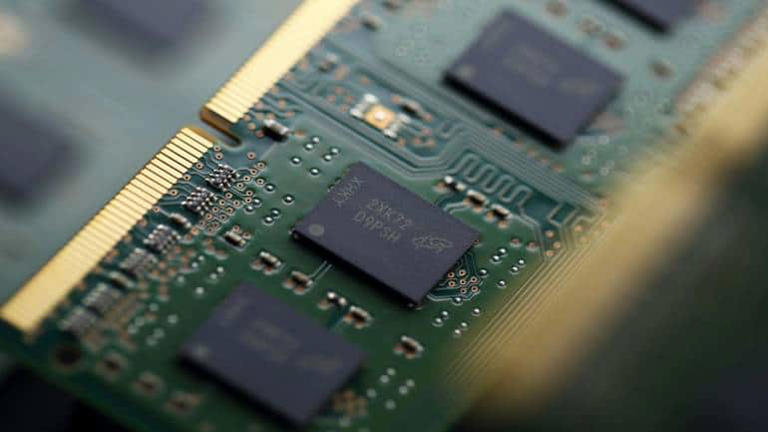
Global semiconductor leaders, including Qualcomm and MediaTek, are increasingly turning their attention to India’s rapidly evolving chip manufacturing and packaging ecosystem. The move toward local sourcing could help reduce production costs, strengthen supply chains, and make consumer electronics more affordable for Indian buyers.
Both fabless chipmakers have indicated that they are open to sourcing chips locally if India’s production ecosystem proves to be strategically and commercially viable.
“India has had multiple false starts over the last 20 years in building a semiconductor manufacturing ecosystem. But this time, I believe things are truly taking off,” said Anku Jain, Managing Director of MediaTek India. “If the ecosystem matures in the right direction, we’d be happy to source locally.”
Jain credited the government’s Production Linked Incentive (PLI) schemes for driving momentum, noting that around ten major semiconductor projects have already been announced. “This growth isn’t just about fabs or OSATs, it extends to electronics manufacturing as a whole,” he added, emphasizing MediaTek’s interest in local collaboration and innovation.
Meanwhile, Qualcomm is also in active discussions with several Indian suppliers, including the Tata Group, to explore chip packaging opportunities.
“The government is launching strong initiatives around semiconductors, Made in India, and digitizing the country. We’re supporting these efforts and are in talks with multiple suppliers,” said Akash Palkhiwala, Qualcomm’s COO and CFO.
Industry experts believe the presence of Qualcomm and MediaTek both of which already have strong R&D operations in India could play a transformative role in shaping the country’s semiconductor value chain.
“They can build custom solutions and back companies that need strong IP and design support,” said Tarun Pathak, Research Director at Counterpoint Research.
Growing R&D Footprint
Both companies continue to expand their research and development centers in India, working on technologies such as 5G, AI, Wi-Fi, and IoT.
“Our Indian R&D centers are an extension of our global R&D while also supporting local partners to optimize our solutions,” said MediaTek’s Jain.
Palkhiwala echoed a similar sentiment, noting that Qualcomm’s India engineering base has grown significantly, especially in the past five years. “The talent pool here is incredible, and having engineers close to customers helps us serve them better,” he said, adding that further investments are on the horizon.
Chip Prototypes Coming Soon
Under the ₹76,000-crore India Semiconductor Mission (ISM), the government has approved ten semiconductor projects with total proposed investments of about ₹1.6 lakh crore across six states.
Recently cleared projects, including those by Micron, CG Semi, Tata Electronics, and Kaynes OSAT, collectively represent ₹66,000 crore in investments. These companies are expected to roll out chip prototypes from their pilot production lines later this year, with commercial manufacturing anticipated to begin next year.
While large-scale fabrication facilities are still under construction, pilot production and small-batch testing have already begun, signaling that India’s long-anticipated semiconductor push is finally gaining real momentum.
Get More Insights@ PrecedenceResearch.com

- ESG Software Market 2025: Comprehensive Key Players Ecosystem and Revenue Outlook - May 20, 2026
- ESG Software Market Worth Around USD 31.96 Billion by 2035 - May 20, 2026
- Hematopoietic Stem Cell Transplantation Market Size to Attain USD 24.32 Billion by 2035 as Precision Medicine and AI Reshape Blood Cancer Treatment - May 20, 2026
