
Celiac Disease Treatment Market Size to Soar USD 2.18 Billion by 2034, Growing at a CAGR of 12.04%
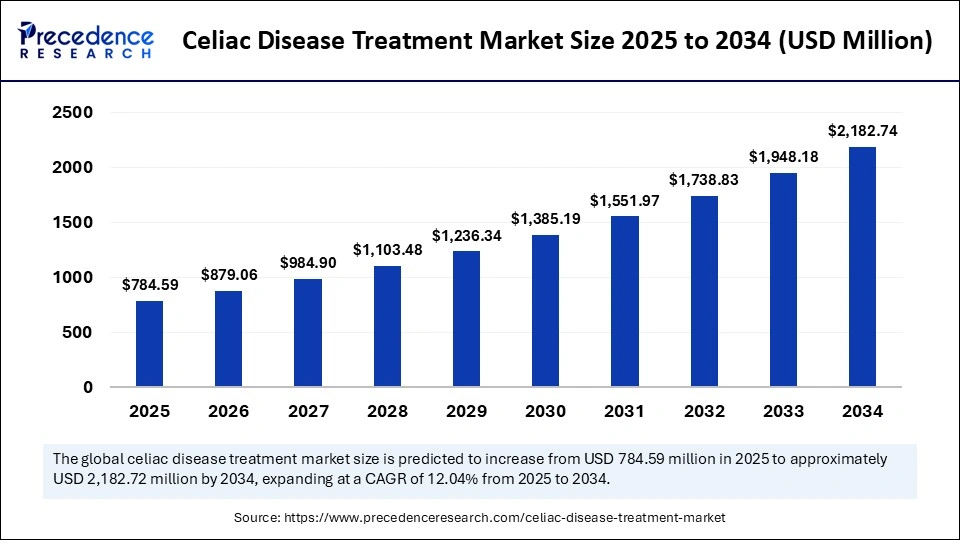
The global celiac disease treatment market is poised for significant expansion, forecast to grow from USD 784.59 million in 2025 to approximately USD 2,182.74 million by 2034, registering a robust compound annual growth rate (CAGR) of 12.04%. This surge is driven by rising disease diagnosis rates, heightened awareness, and continuous progress in therapeutic research and innovations.
Celiac Disease Treatment Market Key Insights
-
The market was valued at USD 784.59 million in 2025 and is projected to reach USD 2,182.74 million by 2034.
-
North America led the market with the largest share of 40% in 2024.
-
Asia Pacific is anticipated to record the fastest CAGR through 2034.
-
Gluten-free drugs account for the dominant product segment with 60% market share in 2024.
-
Immune modulators held the largest share of 40% as a mechanism of action in 2024.
-
Oral administration routes captured 70% market share in 2024, with injectables growing fastest.
-
Hospital and clinic end-users led with 50% share, while pharmacies & retail stores are the fastest-growing segment.
-
Online and e-commerce distribution channels are expected to expand rapidly over the forecast period.
How Is AI Influencing the Celiac Disease Treatment Landscape?
Artificial intelligence (AI) is becoming increasingly pivotal in advancing celiac disease treatment. AI-driven analytics platforms facilitate early and more accurate diagnosis by analyzing complex patient data, helping to distinguish celiac disease from other gastrointestinal disorders. This improvement enhances patient stratification, enabling tailored therapeutic approaches.
In drug development, AI accelerates the discovery of novel enzyme therapies and immune modulators by predicting molecular interactions and optimizing clinical trial designs. The integration of AI-powered tools improves treatment efficacy and reduces development costs, driving innovation in this growing market.
What Factors Are Driving Market Growth?
Market expansion is primarily propelled by rising global prevalence and improved diagnostic rates of celiac disease. Increased patient awareness and adoption of gluten-free diets have created a growing demand for gluten-free drugs and therapies.
Advances in therapeutic interventions such as enzyme therapies that help break down gluten peptides and immune-modulating drugs that target the autoimmune response are creating new treatment avenues beyond dietary management. Additionally, expanding distribution channels, including specialty pharmacies and e-commerce platforms, facilitate better patient access to treatments.
Celiac Disease Treatment Market Scope
| Report Coverage | Details |
| Market Size in 2025 | USD 784.59 Million |
| Market Size in 2026 | USD 879.06 Million |
| Market Size by 2034 | USD 2,182.74 Million |
| Market Growth Rate from 2025 to 2034 | CAGR of 12.04% |
| Dominating Region | North America |
| Fastest Growing Region | Asia Pacific |
| Base Year | 2024 |
| Forecast Period | 2025 to 2034 |
| Segments Covered | Product Type, Mechanism of Action, Route of Administration, End-User, Distribution Channel, and Region |
| Regions Covered | North America, Europe, Asia-Pacific, Latin America, and Middle East & Africa |
What Are the Emerging Opportunities and Trends in Celiac Disease Treatment?
How is the gluten-free foods industry impacting treatment development?
The booming gluten-free foods industry complements treatment by offering patients improved dietary management options, while also spurring innovations in non-drug therapies and nutritional supplements.
Which treatment segments are expected to demonstrate accelerated growth?
Non-drug therapies, particularly dietary modification technologies, and enzyme therapies aimed at mitigating gluten exposure effects are forecasted to grow at the fastest rates.
Are biotech startups and investors playing a role in market evolution?
A dynamic ecosystem of biotech startups such as ImmunogenX, Glutenon, and Calypso Biotech are innovating peptide-based drugs and biologics with strong investor backing, indicating potential for transformative treatments.
What Challenges and Cost Pressures Does the Market Face?
Challenges include the high cost and lifelong adherence demanded by gluten-free therapies, limited availability of disease-modifying drugs, and the complexity of auto-immune disease management. Development costs for innovative therapies and regulatory hurdles also contribute to market pressure. Patient compliance and education remain critical barriers that require ongoing focus.
Celiac Disease Treatment Market Segment Insights
Product Type Insights
Gluten-Free Drugs Lead the Market
The gluten-free drugs segment dominated the celiac disease treatment market, accounting for around 60% share in 2024. This leadership stems from the lifelong adherence to gluten-free therapy, which remains the most effective and prescribed approach for managing celiac disease. Increasing awareness of the disease’s symptoms and long-term complications has driven demand for gluten-free therapeutic products. The wide retail availability and accessibility of gluten-free solutions across supermarkets, specialty stores, and pharmacies continue to support the segment’s growth.
Non-Drug Therapies Set for Fastest Growth
The non-drug therapies segment is projected to record the fastest growth during the forecast period. This is due to the dominance of non-pharmacological interventions—mainly dietary modifications—as the only universally accepted treatment method. The rapid expansion of the gluten-free food and beverage sector and innovations in nutritional technologies are further boosting opportunities for supportive therapies and lifestyle management solutions.
Mechanism of Action Insights
Immune Modulators Dominate the Market
The immune modulators segment led the market with a 40% share in 2024. Since celiac disease is an autoimmune disorder triggered by gluten ingestion, immune modulators are designed to regulate or suppress the body’s abnormal immune response. These therapies address the disease’s root cause rather than merely alleviating symptoms, positioning them as a key focus area for long-term, disease-modifying treatments.
Enzyme Therapy Grows Rapidly
The enzyme therapy segment is expected to grow at the fastest pace. Its appeal lies in its potential to mitigate gluten’s harmful effects, providing an alternative for patients struggling to maintain a strict gluten-free diet. These enzyme-based treatments break down gluten peptides, helping reduce intestinal damage and improving patient quality of life, especially in cases of accidental gluten exposure.
Route of Administration Insights
Oral Route Remains Dominant
The oral segment accounted for the largest share about 70% in 2024, due to its convenience, non-invasiveness, and patient preference. Oral therapies allow easy self-management and align with the growing emphasis on non-invasive treatment options for chronic conditions. The development of user-friendly formulations and rising awareness of gluten-related disorders continue to strengthen this segment’s dominance.
Injectable Route Shows Strong Potential
The injectable segment is anticipated to grow at the fastest CAGR during the forecast period. Growth is supported by the introduction of novel biologics and immune-modulatory drugs for refractory or severe celiac disease cases. As these advanced therapies often require precise systemic delivery, injectables are emerging as the most effective route in clinical and hospital settings.
End User Insights
Hospitals & Clinics Hold the Largest Share
The hospitals and clinics segment dominated the market with around 50% share in 2024. Hospitals serve as primary centers for diagnosis, treatment initiation, and management of complex or refractory celiac disease. Access to advanced therapeutic interventions such as enzyme therapy and biologics and well-structured healthcare infrastructure contribute to this segment’s strong position.
Pharmacies & Retail Stores Grow Fastest
The pharmacies and retail stores segment is projected to witness the fastest growth. Rising demand for gluten-free supplements, enzyme therapies, and dietary aids available both with and without prescriptions is driving this trend. Pharmacies play an essential role in long-term disease management, while expanding retail and e-commerce accessibility continues to enhance patient reach and convenience.
Distribution Channel Insights
Hospital Pharmacies Lead the Market
The hospital pharmacies segment led the market with a 45% share in 2024. Their dominance is attributed to their role in managing complex autoimmune disorders like celiac disease through supervised treatment and monitoring. Hospital pharmacies ensure safe medication use, ongoing symptom tracking, and professional healthcare support, all of which are critical for effective disease management.
Online/E-Commerce Channels Expand Rapidly
The online and e-commerce segment is expected to grow at the fastest CAGR between 2025 and 2034. Consumers and healthcare professionals increasingly favor online platforms for their broader product range and competitive pricing. The accessibility and convenience offered by e-commerce are accelerating the adoption of online pharmaceutical purchases for celiac disease management.
Celiac Disease Treatment Market Regional Insights
North America Leads the Global Market
North America held the largest share around 40% in 2024, driven by advanced healthcare infrastructure, strong R&D investment, and growing awareness of autoimmune and gluten-related disorders. The region benefits from government-backed initiatives, a robust biotechnology ecosystem, and leading companies specializing in immune and gastrointestinal health. The U.S. FDA’s support for accelerated drug approvals and clinical research further boosts regional leadership.
U.S. Market Outlook:
The U.S. celiac disease treatment market was valued at USD 241.65 million in 2025 and is projected to reach USD 685.11 million by 2034, growing at a CAGR of 12.25%. Strong clinical research by institutions like the Mayo Clinic and FDA-driven regulatory support are key growth drivers.
Asia Pacific Emerges as the Fastest-Growing Region
Asia Pacific is projected to witness the fastest growth over the forecast period. Rising awareness of gluten intolerance, higher healthcare spending, and advancements in diagnostic technologies are key contributors. Government-backed healthcare policies and expanding infrastructure are improving screening, early diagnosis, and treatment access across emerging economies.
India Market Trends:
India is seeing a surge in gluten-free product consumption due to greater awareness of celiac disease and dietary management. Domestic food manufacturers are launching innovative gluten-free offerings, particularly in urban centers. Improved diagnostics and awareness among healthcare professionals are also driving early detection and patient care initiatives.
Europe Shows Steady Growth Momentum
Europe is expected to see substantial growth due to supportive healthcare policies, increased diagnosis rates, and active patient advocacy groups. Enhanced diagnostic capabilities and public awareness campaigns are enabling better disease detection and management.
Germany Market Trends:
Germany’s advanced healthcare infrastructure and diagnostic technologies—such as celiac-specific antibody and genetic testing—are fueling early detection. The country also shows strong growth in gluten-free food availability across supermarkets, restaurants, and health stores, reflecting a mature approach to managing celiac disease.
Which Companies Are Leading Innovations and Breakthroughs?
Leading companies driving breakthroughs include Beyond Celiac Investments (BCI), ImmunogenX, Glutenon, Calypso Biotech, and Barinthus Biotherapeutics. For instance, Barinthus Biotherapeutics announced a Phase I trial in 2024 for VTP-1000, a promising immunotherapeutic candidate. Additionally, Novartis’s FDA approval of Xolair for food allergy mitigation marks a noteworthy advancement in managing related immune responses, potentially impacting celiac treatment approaches.
Get this report to explore global market size, share, CAGR, and trends, featuring detailed segmental analysis and an insightful competitive landscape overview @ https://www.precedenceresearch.com/sample/7080
You can place an order or ask any questions. Please feel free to contact us at sales@precedenceresearch.com |+1 804 441 9344

- ESG Software Market 2025: Comprehensive Key Players Ecosystem and Revenue Outlook - May 20, 2026
- ESG Software Market Worth Around USD 31.96 Billion by 2035 - May 20, 2026
- Hematopoietic Stem Cell Transplantation Market Size to Attain USD 24.32 Billion by 2035 as Precision Medicine and AI Reshape Blood Cancer Treatment - May 20, 2026
