
U.S. Supplemental Health Market Trends and Future Outlook
The U.S. supplemental health market is expanding rapidly due to increasing out-of-pocket healthcare expenses, a growing aging population, and the need to bridge gaps in traditional insurance. Advancements in AI, personalized insurance models, and telehealth integration are transforming the market landscape, while rising awareness and employer-sponsored plans continue to boost adoption.
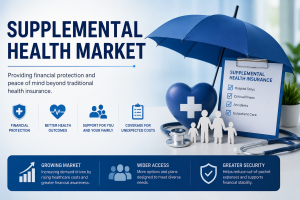
U.S. Supplemental Health Market Overview
The U.S. supplemental health market has become an essential component of the healthcare insurance ecosystem as consumers seek additional protection against rising medical expenses. Supplemental health insurance is designed to cover costs that traditional health insurance plans may not fully reimburse, including deductibles, copayments, hospital stays, critical illnesses, accidents, dental care, and vision services. As healthcare costs continue to increase across the United States, individuals and families are increasingly turning to supplemental coverage to reduce financial burdens associated with medical treatment and recovery.
The market is also benefiting from growing awareness of healthcare-related financial risks and the increasing adoption of high-deductible health plans. Employers are expanding voluntary benefit offerings, while insurance providers are introducing personalized and technology-enabled products that cater to evolving consumer needs. The integration of digital platforms, telehealth services, and AI-driven customer support is further enhancing accessibility and convenience for policyholders.
Get Sample Link: https://www.precedenceresearch.com/sample/3063
U.S. Supplemental Health Market Growth
The growth of the U.S. supplemental health market is closely tied to rising healthcare expenditures and the growing need for comprehensive financial protection. Even individuals covered by employer-sponsored or private health insurance often face substantial out-of-pocket expenses due to deductibles, coinsurance, and uncovered services. Supplemental insurance products help bridge these gaps, providing financial security during unexpected medical events and encouraging broader adoption among consumers.
Another significant factor driving market expansion is the aging population. Older adults typically require more frequent medical care, prescription medications, and specialized treatments. As the number of retirees increases, demand for Medicare supplement plans and critical illness insurance continues to rise. Additionally, employers are increasingly incorporating supplemental health benefits into compensation packages, supporting market growth through workplace enrollment programs.
U.S. Supplemental Health Market Trends
- Growing Adoption of Digital Insurance Platforms
Insurance providers are leveraging digital technologies to simplify policy purchases, claims processing, and customer interactions. Online enrollment and mobile applications are improving customer experiences while reducing administrative costs. - Integration of Telehealth and Virtual Care Services
Supplemental insurers are increasingly partnering with telehealth providers to offer virtual consultations and healthcare support. This trend enhances healthcare accessibility and aligns with changing consumer preferences for convenient medical services. - Expansion of Personalized Insurance Products
Consumers are seeking customized coverage options that address their specific healthcare concerns. Insurers are responding by developing flexible policies that allow customers to select benefits based on lifestyle, age, and health conditions. - Increasing Employer-Sponsored Supplemental Benefits
Organizations are recognizing the value of supplemental health coverage in attracting and retaining employees. Voluntary benefit programs are becoming a key component of comprehensive employee wellness strategies.
U.S. Supplemental Health Market Dynamics
Driver
Rising Out-of-Pocket Healthcare Costs
Healthcare expenses in the United States continue to rise, placing financial pressure on households. Many individuals face substantial costs even after primary insurance coverage. Supplemental health insurance provides an effective solution by helping cover expenses associated with hospitalization, critical illnesses, accidents, and specialized treatments. This increasing financial burden remains one of the strongest drivers of market growth.
Opportunity
Technological Advancements and Product Innovation
Technological innovation presents significant opportunities for market participants. Artificial intelligence, predictive analytics, telemedicine integration, and digital health platforms enable insurers to offer more personalized and efficient services. These technologies help improve risk assessment, streamline claims management, and create customized insurance products that better meet consumer needs.
Challenge
Limited Consumer Awareness
Despite growing demand, many consumers remain unfamiliar with supplemental health insurance products and their benefits. Confusion regarding policy coverage, exclusions, and value propositions can hinder adoption. Insurance providers must invest in education and transparency initiatives to improve understanding and increase market penetration.
U.S. Supplemental Health Market Segments
By Product Type
- Critical Illness Insurance
- Accident Insurance
- Hospital Indemnity Insurance
- Dental Insurance
- Vision Insurance
- Disability Insurance
- Medicare Supplement Insurance
By Coverage Type
- Individual Coverage
- Family Coverage
- Group Coverage
By Distribution Channel
- Insurance Agents and Brokers
- Direct Sales
- Online Platforms
- Employer-Sponsored Programs
By End User
- Individuals
- Families
- Senior Citizens
- Corporate Employees
Applications in the Market
Supplemental health insurance serves multiple applications across the healthcare and insurance sectors. It provides financial assistance during hospitalization, recovery from critical illnesses, accident-related treatments, and ongoing management of chronic conditions. Many policies offer direct cash benefits that policyholders can use for medical bills, transportation expenses, mortgage payments, childcare costs, or income replacement during recovery periods. Employers also utilize supplemental insurance programs to strengthen employee benefit packages and improve workforce satisfaction. As healthcare becomes more expensive, these applications are becoming increasingly valuable for both individuals and organizations.
Case Study Employer-Sponsored Supplemental Health Benefits
A large U.S.-based manufacturing company faced challenges related to employee healthcare concerns and rising absenteeism due to medical financial stress. To address these issues, the company introduced voluntary supplemental health insurance plans, including accident coverage, hospital indemnity insurance, and critical illness policies.
Within a few years, employee participation increased significantly as workers recognized the financial protection offered by these benefits. Employees reported greater confidence in managing unexpected healthcare expenses, while the company experienced improved employee satisfaction and retention rates. This case highlights how supplemental health insurance can support both financial wellness and organizational productivity.
Check this report to: Multiomics Market
Regional Analysis
Northeast United States
The Northeast region represents a significant share of the supplemental health market due to its high healthcare utilization rates and strong insurance coverage penetration. States in this region generally have well-developed healthcare infrastructures and greater awareness of healthcare financial planning. Consumers are increasingly purchasing supplemental coverage to manage the high cost of medical services and specialist care.
Midwest United States
The Midwest market continues to expand as employers strengthen workplace benefit programs and consumers seek additional financial security. The prevalence of chronic diseases and increasing healthcare expenditures are encouraging individuals to explore supplemental insurance products. Rural populations in several Midwestern states are also utilizing supplemental coverage to offset travel and treatment-related expenses.
Southern United States
The Southern region is witnessing substantial growth due to its large population base, rising incidence of chronic health conditions, and expanding senior demographic. Demand for critical illness insurance, accident coverage, and Medicare supplement plans is particularly strong. Employers across the region are increasingly offering supplemental benefits as part of competitive workforce strategies.
Western United States
The Western region is characterized by rapid adoption of digital insurance technologies and innovative healthcare solutions. Consumers are highly receptive to personalized insurance products, telehealth integration, and online enrollment platforms. Strong economic activity and a growing focus on preventive healthcare continue to support market expansion throughout the region.
Future Outlook
The future of the U.S. supplemental health market remains highly promising as healthcare affordability continues to be a major concern for consumers. Rising medical costs, increasing chronic disease prevalence, and an expanding aging population will continue to drive demand for supplemental coverage. Insurers are expected to focus on developing flexible, consumer-centric products that provide comprehensive protection against unexpected healthcare expenses.
Advancements in artificial intelligence, data analytics, telemedicine, and digital enrollment platforms will further transform the industry. Personalized insurance offerings, faster claims processing, and enhanced customer experiences are likely to become key competitive differentiators. As awareness grows and healthcare costs continue to rise, supplemental health insurance is expected to play an increasingly important role in helping Americans achieve greater financial security and healthcare access.

- U.S. Supplemental Health Market Trends and Future Outlook - June 22, 2026
- Multiomics Market Size to Lead USD 13.20 Billion by 2035 - June 19, 2026
- Health and Wellness Market Size to Worth USD 7.76 Trillion by 2035 - June 19, 2026