
Aircraft MRO Market Surges Toward USD 172.73 Billion by 2035
What is the Aircraft MRO Market Size in 2026?
The global aircraft Maintenance, Repair, and Overhaul (MRO) market is entering a transformative growth phase, with its valuation projected to grow from USD 120.3 billion in 2025 to approximately USD 172.73 billion by 2035, expanding at a CAGR of 3.68% from 2026 to 2035.
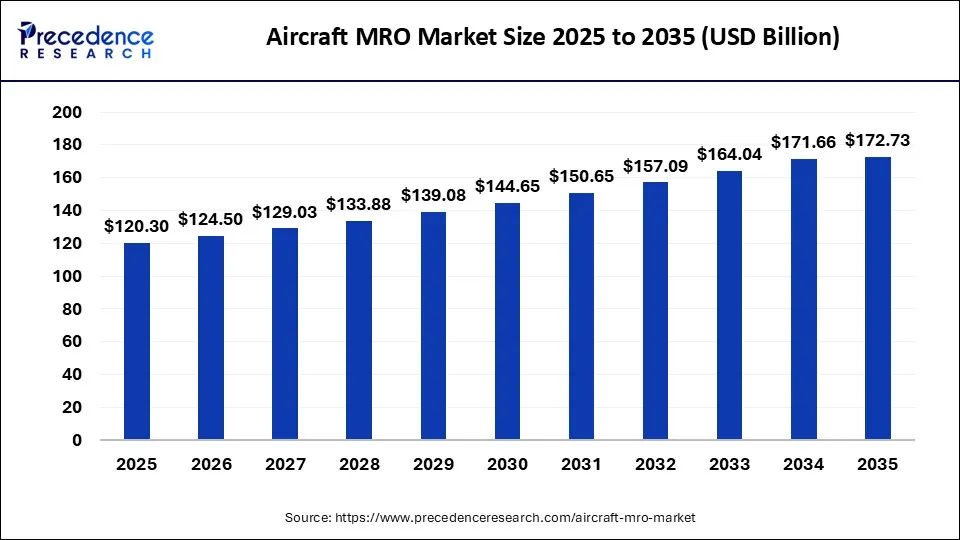
The surge in demand is primarily driven by increasing global air traffic, aging aircraft fleets, stringent aviation safety regulations, and higher aircraft utilization rates. As airlines strive to maximize operational efficiency and reduce downtime, MRO services are becoming mission-critical to ensure airworthiness and cost optimization.
What’s Driving the Aircraft MRO Market?
The market is expected to reach USD 172.73 billion by 2035, reflecting steady long-term expansion.
The industry is growing at a CAGR of 3.68% between 2026 and 2035, supported by rising aviation demand.
North America remains a dominant region, backed by advanced infrastructure and high fleet density.
Engine overhaul services account for the largest revenue share, driven by increasing aircraft age and maintenance needs.
Leading players include AAR Corp., Airbus SE, Lufthansa Technik, Delta TechOps, and Raytheon Technologies Corporation.
How is AI Transforming the Aircraft MRO Market?
Artificial Intelligence is revolutionizing aircraft maintenance by enabling predictive maintenance models that detect faults before they occur. By analyzing real-time data from aircraft sensors, AI reduces unexpected failures, lowers operational downtime, and improves fleet availability.
Additionally, AI-powered digital twins and machine learning algorithms allow MRO providers to simulate aircraft performance under different conditions. This enhances maintenance scheduling accuracy and helps airlines optimize lifecycle costs, making AI a cornerstone of next-generation MRO ecosystems.
What Are the Key Growth Factors of the Aircraft MRO Market?
The aircraft MRO market is being propelled by a combination of structural and technological drivers. The rapid increase in global passenger traffic is forcing airlines to expand fleets, which in turn boosts maintenance demand. Simultaneously, the aging global aircraft fleet requires frequent inspections, repairs, and upgrades.
Another major driver is the rise in outsourcing of MRO services, as airlines focus on core operations and delegate maintenance tasks to specialized providers. Moreover, strict aviation safety regulations ensure consistent demand for scheduled maintenance cycles across commercial and military aviation.
Aircraft MRO Market Scope
| Report Coverage | Details |
| Market Size in 2026 | USD 124.5 Billion |
| Market Size by 2035 | USD 172.73 Billion |
| Growth Rate from 2026 to 2035 | CAGR of 3.68% |
| Largest Market | Asia Pacific |
| Base Year | 2025 |
| Forecast Period | 2026 To 2035 |
| Segments Covered | Service Type, Organization Type, Aircraft Type, and Region |
| Regions Covered | North America, Europe, Asia-Pacific, Latin America, and Middle East & Africa |
What Opportunities Are Emerging in the Aircraft MRO Market?
How is fleet modernization creating new revenue streams?
Fleet modernization is driving demand for retrofits, component upgrades, and avionics enhancements, opening new service verticals for MRO providers.
Why is Asia-Pacific becoming a high-growth hub?
The region is witnessing rapid airline expansion, increasing aircraft deliveries, and cost advantages, positioning it as a future MRO hotspot.
Can sustainability redefine MRO operations?
Yes, the adoption of eco-friendly materials, sustainable aviation fuels (SAFs), and green repair processes is creating a new wave of environmentally responsible MRO services.
Aircraft MRO Market Dynamics
Driver
The aircraft Maintenance, Repair, and Overhaul (MRO) market is largely driven by the growing demand for air travel, both for passengers and cargo. As global economies expand and disposable incomes rise, air travel is becoming more accessible and affordable to a broader population. At the same time, rapid urbanization and improved connectivity in emerging economies are further accelerating this demand.
To meet increasing passenger and freight needs, airlines are expanding their fleets and increasing flight frequencies. This surge in aircraft operations directly boosts the demand for MRO services, which are essential to ensure safety, reliability, and airworthiness.
Strict regulatory standards set by aviation authorities also play a critical role. Airlines must conduct regular inspections, maintenance checks, and repairs to comply with safety regulations. As aircraft utilization increases, maintenance cycles become more frequent, creating continuous demand for MRO services. These services help airlines manage wear and tear, maintain operational efficiency, and ensure passenger safety in a fast-evolving aviation landscape.
Restraint
Despite strong demand, the aircraft MRO market faces a major challenge in the form of high operational costs. Maintenance activities require skilled labor, specialized equipment, and expensive spare parts, all of which contribute to significant expenses.
The cost burden is particularly high for large commercial aircraft, where maintenance complexity is greater. Regular inspections, repairs, and compliance checks are mandatory, but they can strain airline finances—especially in a highly competitive industry with thin profit margins.
Additionally, Original Equipment Manufacturers (OEMs) control the pricing and availability of critical spare parts. This can further inflate maintenance costs and sometimes lead to delays in repairs or reduced maintenance frequency, potentially impacting operational efficiency.
Opportunity
Outsourcing MRO services has become a common strategy among airlines and aircraft operators, creating significant opportunities for specialized service providers.
By outsourcing, airlines can focus on their core operations—such as flight management and customer service—while relying on expert MRO providers for maintenance tasks. This improves operational efficiency and reduces the need for heavy investments in in-house maintenance infrastructure.
MRO providers offer access to skilled technicians, engineers, and advanced technologies, ensuring high-quality maintenance. Additionally, they benefit from economies of scale, bulk purchasing, and efficient inventory management, allowing them to provide cost-effective solutions.
As a result, outsourcing enables airlines to lower costs, improve reliability, and maintain high safety standards, while MRO companies gain opportunities to expand their client base and build long-term partnerships.
Service Insights
Engine maintenance is expected to dominate the market during the forecast period. Aircraft engines are highly complex and critical components that require frequent inspection, repair, and overhaul. Increasing wear and tear, along with the growing need for engine replacements and upgrades, is driving this segment’s growth. Many OEMs are also offering comprehensive “total care” maintenance contracts, further supporting expansion.
The component maintenance segment is also projected to grow significantly. Rising air traffic and increased aircraft usage are driving demand for spare parts and component servicing. Regular treatments such as anti-corrosion coatings are necessary to maintain reliability, particularly for metal components.
Organization Type Insights
Independent MRO providers are expected to dominate the market. These providers benefit from their ability to handle large volumes of maintenance work and offer specialized services across multiple aircraft types.
Their flexibility, technical expertise, and skilled workforce enable them to deliver high-quality services, making them a preferred choice for airlines worldwide.
Aircraft Type Insights
The narrow-body aircraft segment is expected to lead the market. These aircraft are widely used due to their operational efficiency and lower environmental impact, especially for short- and medium-haul routes.
The increasing adoption of narrow-body aircraft is driving demand for frequent inspections, component maintenance, and repairs, contributing significantly to MRO market growth.
Regional Insights
Asia Pacific
Asia Pacific dominates the aircraft MRO market and is expected to maintain its leading position. The region’s rapid aviation growth, expanding airline fleets, and increasing use of air transport for logistics are key drivers.
Improving infrastructure, supportive regulations, and strong growth potential in emerging economies further enhance market expansion.
China
China is experiencing strong demand for MRO services due to its rapidly growing commercial airline fleet and increasing domestic air travel. Investments in airport infrastructure and efforts to develop in-house maintenance capabilities are further strengthening the market.
North America
North America is projected to witness significant growth, supported by a well-established aviation industry and strong regulatory frameworks.
United States
The U.S. has the largest active aircraft fleet globally, leading to continuous demand for engine, airframe, and component maintenance. The country is also a leader in advanced MRO technologies such as predictive maintenance and data-driven inspections.
Europe
Europe continues to show steady growth due to high air traffic and the presence of major international airlines. Fleet modernization and the adoption of fuel-efficient aircraft are increasing demand for specialized maintenance services.
Germany
Germany plays a key role in the European MRO market, supported by strong engineering capabilities, advanced technology, and a strategic central location. The country excels in complex MRO services, particularly in engines and structural components.
Latin America
Latin America is emerging as a growing MRO market. Airlines are extending aircraft lifespans through maintenance rather than rapid fleet replacement, increasing demand for MRO services.
Brazil
Brazil leads the region due to its strong domestic aviation network and high aircraft utilization rates, which require frequent maintenance.
Middle East & Africa
This region is gaining importance due to expanding aviation hubs, long-haul travel demand, and strategic geographic positioning.
UAE
The UAE stands out as a regional leader, with world-class MRO facilities, advanced technology investments, and a strong presence of major international airlines.
Aircraft MRO Market Companies
- AAR Corp.
- Airbus SE
- Delta Airlines, Inc. (Delta TechOps)
- Hong Kong Aircraft Engineering Company Limited
- KLM U.K. Engineering Limited
- Lufthansa Technik
- MTU Aero Engines AG
- Raytheon Technologies Corporation (Previously United Technologies Corporation)
- Singapore Technologies Engineering Ltd
- TAP Maintenance & Engineering (TAP Air Portugal)
Segments Covered in the Report:
By Service Type
- Airframe Maintenance
- Engine Maintenance
- Component Maintenance
- Line Maintenance
By Organization Type
- Airlines / Operators
- Independent MRO Providers
- OEM-affiliated MROs
By Aircraft Type
- Narrow-body
- Wide body
- Regional Jets
- Turboprops
By Geography
- North America
- Europe
- Asia-Pacific
- Latin America
- Middle East and Africa
Get Sample Link: https://www.precedenceresearch.com/sample/3243
Also Read : https://www.marketstatsinsight.com/generic-sterile-injectable-market/

- Corporate Wellness Market Surges Toward USD 500.09 Billion by 2035 - April 22, 2026
- Portable Medical Devices Market Surges Toward USD 221.71 Billion by 2035 - April 22, 2026
- Infant Incubator Market Set to Surpass USD 3.27 Billion by 2035 - April 22, 2026