Healthcare

Hematopoietic Stem Cell Transplantation Market Size to Attain USD 24.32 Billion by 2035
What is the Hematopoietic Stem Cell Transplantation Market Size in 2026?

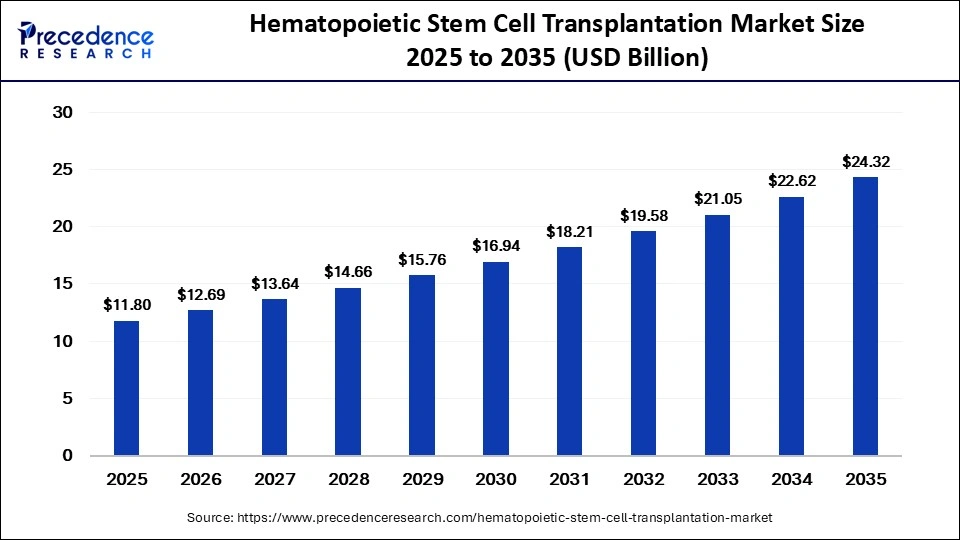
The global hematopoietic stem cell transplantation market size was reached at USD 11.80 billion in 2025 and is projected to grow from USD 12.69 billion in 2026 to approximately USD 24.32 billion by 2035, registering a CAGR of 7.50% during the forecast period from 2026 to 2035.

Hematopoietic Stem Cell Transplantation Market Size 2026 to 2035

Key Takeaways

  • North America dominated the global hematopoietic stem cell transplantation market, accounting for a 38% share in 2025.
  • Asia-Pacific is expected to grow at the fastest CAGR of 9.2% during the forecast period.
  • By type of transplant, the autologous stem cell transplantation (ASCT) segment held a dominant position in the market, accounting for 50% of the market share in 2025.
  • By type of transplant, the allogeneic stem cell transplantation (AlloSCT) segment is expected to grow at the fastest CAGR of 7.8% CAGR between 2026 and 2035.
  • By stem cell source, the bone marrow-derived stem cells segment accounted for a considerable revenue share of 40% in the market in 2025.
  • By stem cell source, the umbilical cord blood stem cells segment is expected to grow at the highest CAGR of 7.8% CAGR between 2026 and 2035.
  • By application, the hematologic malignancies segment led the global market with a share of 50% in 2025.
  • By application, the autoimmune diseases segment is expected to expand rapidly with a CAGR of 8% between 2026 and 2035.
  • By end-use, the hospitals segment accounted for a considerable revenue share of 60% in the market in 2025.
  • By end-use, the research institutes segment is expected to grow at the fastest CAGR of 8.5% between 2026 and 2035.

Advancing Hematopoietic Stem Cell Transplantation Through Innovative Therapeutic Solutions

The prevalence of hematologic diseases like leukaemia, lymphoma, anaemia, and inherited immune deficiencies is creating significant growth opportunities for the market. A very specific technique that is employed when healthy stem cells are transplanted into the patient to restore normal blood cell formation in intensive therapy. Growth of awareness about early diagnosis and development of advanced health care infrastructure is further propelling the growth of the market. Significant population ageing and widening contribution of blood cancer and genetic disorders in this ageing population have provided a significant drive for the demand for autologous and allogeneic stem cell transplantation procedures.

Key AI Integration in the Hematopoietic Stem Cell Transplantation Market

The integration of Artificial Intelligence is transforming the Regenerative Medicine by improving diagnostic accuracy, enhancing donor-recipient matching, and optimizing treatment planning. AI technologies are helping healthcare professionals analyze complex patient data more efficiently, enabling faster and more precise clinical decisions.

In stem cell research, AI-powered analytics and machine learning models are accelerating drug discovery and improving hematopoietic stem cell transplantation techniques. These technologies assist researchers in identifying treatment patterns, predicting transplant outcomes, and developing personalized therapeutic strategies.

  • Increased success in the grafting of patients with leukaemia and lymphoma is being realised by these methods through new methods of matching donors, expanding donor panels globally, and the development of new immunosuppressive therapies to reduce the likelihood of rejection and other complications.
  • Genomic manipulation and technologies utilising “regen” are increasingly converging to find innovative and new ways of eliminating inherited blood disorders and prolonging patient lives globally, and improving the survival rate.
  • The growing availability of cord blood, decreased risk of graft-versus-host disease (GVHD), and increasing use from around the world for treatment of pediatric and adult hematologic disorders are propelling growth in the U.S. market.
  • The expansion of healthcare facilities, along with the growing investment from government bodies in the treatment of cancer and rare diseases, is giving a fillip to the availability of stem cell transplantation (SCT) services, augmenting the clinical research activities, and enhancing the global market.

Market Dynamics

Drivers

Rising Incidence of Hematologic Disorders

The rising prevalence of blood-related disorders such as Leukemia, Lymphoma, multiple myeloma, and various inherited blood diseases is significantly driving the growth of the Regenerative Medicine. Hematopoietic stem cell transplantation (HSCT) has become a critical therapeutic approach for patients requiring bone marrow restoration, immune system recovery, and long-term disease management.

Advancements in transplantation technologies, including improved donor compatibility testing, advanced stem cell preservation methods, and enhanced post-transplant care, are steadily increasing treatment success rates and patient survival outcomes. These innovations are helping healthcare providers deliver safer, more effective, and personalized transplantation procedures for patients with complex hematological disorders.

Segmental Insights

Type of Transplant Insights

The Autologous Stem Cell Transplantation Segment Held the Largest Market Share of 50% in 2025

The autologous stem cell transplantation (ASCT) segment held a dominant position in the hematopoietic stem cell transplantation market with a share of 50% in 2025, due to the improvements and trends in individualized transplantation techniques, together with the rise in haematological malignancies. However, with diseases like lymphoma and multiple myeloma, the technique of “autologous transplantation” is the preferred method because it can be used to decrease the chances of developing graft-versus-host disease and increase the patient’s compatibility. The increasing variety of cancer survivors with persistent cancer management and cancer prevention issues will also drive businesses in these segments.

Application Insights

The Hematologic Malignancies Led the Market with 50% of Market Share in 2025

The hematologic malignancies segment dominated the global Regenerative Medicine in 2025, accounting for approximately 50% of the market share. This dominance is primarily attributed to the rising incidence of blood cancers such as Leukemia, Lymphoma, and multiple myeloma, which continue to drive the demand for hematopoietic stem cell transplantation (HSCT) procedures globally.

Stem cell transplantation is considered one of the most effective treatment options for hematologic malignancies, particularly for patients undergoing high-dose chemotherapy that destroys bone marrow cells. HSCT helps restore healthy bone marrow function and supports long-term disease control and recovery.

Regional Insights

North America Hematopoietic Stem Cell Transplantation Market Size and Growth 2026 to 2035
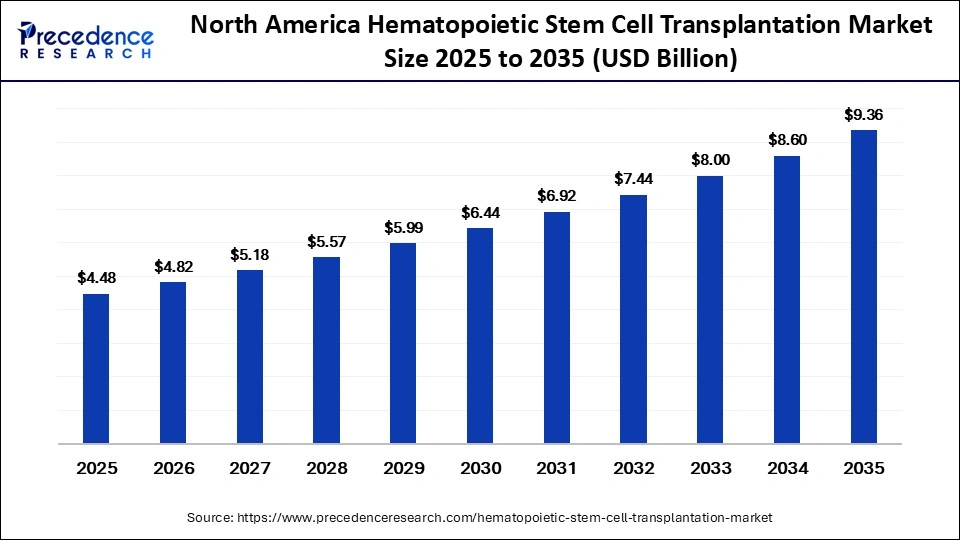
The North America hematopoietic stem cell transplantation market was valued at USD 4.48 billion in 2025 and is projected to reach approximately USD 9.36 billion by 2035, growing at a CAGR of 7.65% during the forecast period from 2026 to 2035.

North America Hematopoietic Stem Cell Transplantation Market Size 2025 to 2035

Which Factors Drive the Hematopoietic Stem Cell Transplantation Market in North America?

North America dominated the global market with a share of 38% in 2025, owing to the leading-edge healthcare amenities, highly developed clinical research choices, and extensive adoption of new and ground-breaking stem cell transplantation technology. The region boasts several specialized transplant institutions, in addition to incubating biotechnology companies and huge donor registries. Support for regenerative medicine research continues, along with a new environment of reimbursement and growing investment in precision medicine, further boosting regional growth.

U.S. Market Trends

The U.S. leads the market in North America, as the country’s healthcare system is robust and has a well-established infrastructure, and hematologic malignancies have a rising trend of occurrence in the country. The incidence of blood cancers like leukaemia, lymphoma, and multiple myeloma is going up, and this has led to a high demand for both autologous and allogeneic stem cell transplantation therapies. Additionally, the research and development spending of the pharmaceutical and biotechnology companies specializing in drugs for the field of regenerative medicine, gene editing technologies, and personalised medicines is bringing innovation to the forefront.

Hematopoietic Stem Cell Transplantation Market Share, By Region, 2025-2035 (%)

Hematopoietic Stem Cell Transplantation Market Companies

Miltenyi Biotec: Develops advanced cell therapy, stem cell research, and immunotherapy technologies supporting hematopoietic stem cell transplantation and regenerative medicine applications.
The company is known for innovative cell separation and processing solutions used in clinical research and transplantation procedures worldwide.

AllCells: Provides high-quality human primary cells and biological materials for stem cell research, drug development, and cell therapy applications.
The company supports researchers and healthcare organizations with specialized biospecimen solutions for transplantation and regenerative medicine studies.
Thermo Fisher Scientific: Offers laboratory technologies, diagnostics, and cell culture solutions supporting stem cell transplantation, genomic research, and precision medicine.Its advanced research tools and healthcare technologies are widely used in hospitals, laboratories, and life sciences industries globally.
Hematologic Technologies: Specializes in blood coagulation products, hematology research materials, and biologics supporting stem cell and hematologic disease research.
The company contributes to advancements in transplantation studies and blood-related therapeutic innovations.
Bio-Rad Laboratories: Provides diagnostic systems, laboratory instruments, and biotechnology solutions for clinical diagnostics and stem cell research applications.
Its technologies support molecular biology, disease detection, and advanced healthcare research worldwide.
Takeda Pharmaceutical Company: Develops innovative therapies and biopharmaceutical solutions focused on oncology, rare diseases, and regenerative medicine.
The company actively supports stem cell transplantation advancements and personalized healthcare treatments globally.
Sandoz: A global leader in generic medicines and biosimilars, supporting accessible healthcare and advanced biologic treatment solutions.
The company contributes to stem cell transplantation and oncology care through affordable therapeutic products and biosimilar innovations.
Oasis Diagnostics: Provides diagnostic and sample collection technologies supporting healthcare testing, disease monitoring, and clinical research applications.
The company focuses on non-invasive diagnostic innovations that improve patient care and healthcare efficiency.

Check this report to: Super Disintegrants Market

Get this report to explore global market size, share, CAGR, and trends, featuring detailed segmental analysis and an insightful competitive landscape overview: https://www.precedenceresearch.com/sample/8421

You can place an order or ask any questions. Please feel free to contact us at sales@precedenceresearch.com |+1 804 441 9344