
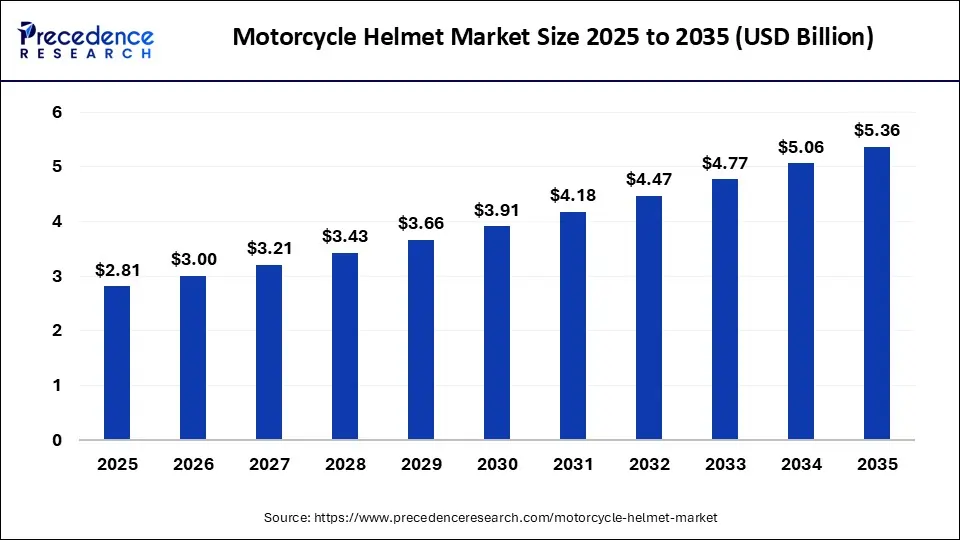
Motorcycle Helmet Market Size to Surpass USD 5.36 Billion by 2035
What is the Motorcycle Helmet Market Size in 2026?
The global motorcycle helmet market is witnessing strong momentum, driven by rising awareness of rider safety, stringent government regulations, and continuous technological advancements. According to Precedence Research, the market is projected to expand at a notable CAGR over the forecast period, reaching a significant valuation by the end of the decade. The surge in motorcycle ownership across emerging economies, coupled with increasing urbanization and traffic congestion, is further accelerating demand.
Growing enforcement of helmet laws, especially in countries like India, China, and Southeast Asian nations, has significantly contributed to market expansion. Additionally, consumer preference is shifting toward premium, lightweight, and smart helmets equipped with advanced safety and connectivity features.
What Are the Key Market Highlights?
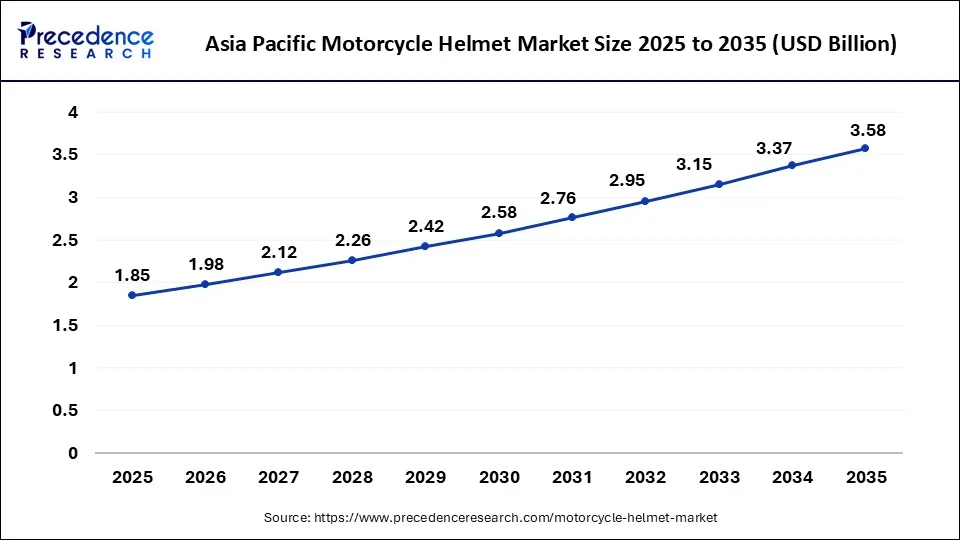
The global motorcycle helmet market is valued at a substantial level in 2025 and is projected to grow at a steady CAGR through 2034. Asia Pacific dominates the global landscape due to high motorcycle usage and strict safety mandates. Full-face helmets account for the largest market share owing to superior protection. Offline distribution channels remain dominant, although online sales are rapidly increasing. Leading players such as Shoei Co., Ltd., Arai Helmet Ltd., and HJC Helmets are focusing heavily on innovation and product differentiation.
How Is Artificial Intelligence Transforming the Motorcycle Helmet Market?
Artificial Intelligence is gradually reshaping the motorcycle helmet industry by enhancing safety features and user experience. Smart helmets integrated with AI can detect accidents in real time and automatically send alerts to emergency contacts, significantly reducing response time during critical situations. These helmets also feature voice command systems, navigation assistance, and adaptive noise control, improving rider convenience.
Moreover, AI-driven analytics are helping manufacturers design helmets with improved aerodynamics, impact resistance, and comfort. By analyzing crash data and rider behavior, companies are able to create more effective safety solutions, which is expected to boost adoption rates globally.
What Are the Key Growth Drivers of the Motorcycle Helmet Market?
Rising Road Safety Awareness
Governments and safety organizations worldwide are increasingly emphasizing helmet usage to reduce fatalities and injuries. Public awareness campaigns and strict penalties for non-compliance are major contributors to market growth.
Expanding Motorcycle Ownership
The growing popularity of motorcycles as an affordable and convenient mode of transportation, particularly in developing regions, is fueling helmet demand.
Technological Advancements
Innovations such as smart helmets, lightweight materials like carbon fiber, and improved ventilation systems are attracting consumers toward premium products.
E-commerce Expansion
The rise of online platforms has made helmets more accessible, offering consumers a wide variety of choices along with competitive pricing.
What Opportunities and Trends Are Shaping the Market?
Are Smart Helmets the Future of Rider Safety?
Yes, smart helmets are emerging as a major trend, integrating features like Bluetooth connectivity, GPS navigation, and crash detection systems. These innovations are expected to redefine safety standards and create new growth opportunities.
Is Sustainability Influencing Helmet Manufacturing?
Absolutely. Manufacturers are increasingly adopting eco-friendly materials and sustainable production processes to meet environmental standards and consumer expectations.
Will Emerging Markets Drive Future Growth?
Indeed, countries in Asia, Latin America, and Africa are expected to offer significant growth potential due to rising disposable incomes and increasing vehicle ownership.
Market Dynamics
Drivers
Stricter Safety Regulations
One of the biggest factors driving the motorcycle helmet market is the growing emphasis on rider safety. Governments across various regions have implemented strict safety laws that make it mandatory for riders to wear helmets. These regulations don’t just apply to users but also to manufacturers, who must follow quality standards and produce durable, high-performance helmets.
Influence of Travel Vlogging and Social Media
The rise of social media platforms like Instagram, Facebook, and YouTube has inspired many young people to explore traveling, especially through motorbike journeys. Bikes are increasingly becoming the preferred mode of travel for adventure seekers. Travel vloggers often promote safe riding practices, including wearing helmets, which has positively influenced their audience. Additionally, modern helmets come in stylish designs, making them a trendy accessory among youth. The growing popularity of biking is directly contributing to increased helmet sales.
Restraints
Discomfort and Breathing Issues
Despite their importance, helmets can sometimes be uncomfortable. Many users complain about feelings of suffocation, especially during long rides or in hot weather. Poor ventilation and low-quality materials can make the experience worse, even leading to issues like excessive sweating or hair damage. In many cases, people either avoid wearing helmets or wear them only to comply with traffic rules, particularly in rural areas.
Competition from Low-Quality Helmets
Another major challenge is the availability of cheap, low-quality helmets in the market. These products often look appealing but are made from inferior materials, offering little to no real protection. Many consumers choose these options to save money, unknowingly putting their safety at risk. Such products not only endanger lives but also affect the sales of high-quality helmets. Proper testing and regulation are essential to address this issue.
Opportunities
Growth in Motorcycle and Accessory Sales
As the motorcycle industry continues to grow, so does the demand for related accessories like helmets and riding gear. Helmets, along with biker jackets, are increasingly seen as a symbol of identity and lifestyle among riders. Many consumers purchase them not just for safety but also for style and social recognition.
Scope for Innovation
There is significant potential for innovation in helmet design and technology. Manufacturers can focus on improving ventilation, comfort, and overall user experience. Features like built-in communication systems, Bluetooth connectivity, and even advanced technologies such as augmented or virtual reality can enhance appeal. Customization options, where users can design helmets based on their preferences, are also likely to attract more buyers.
Product Insights
Full-Face Helmets
In 2025, full-face helmets dominated the market due to their superior protection. These helmets cover the entire head and face, reducing the risk of serious injuries during accidents. They are especially effective in protecting the jaw, nose, and mouth. Their design also includes high-quality visors for better visibility and improved aerodynamics, reducing drag while riding.
Open-Face Helmets
The open-face helmet segment is expected to grow rapidly in the coming years. These helmets provide better ventilation and comfort, making them ideal for short rides or hot climates. They offer a wider field of vision and make communication easier. They are also more convenient for riders who wear glasses, though they provide less facial protection compared to full-face helmets.
End-User Insights
Riders
Riders accounted for the largest share of the market in 2025, as they are at the highest risk during accidents. Safety laws have made it compulsory for riders to wear helmets, increasing demand for high-quality products. Modern helmets for riders often include advanced features such as Bluetooth connectivity, noise reduction, and aerodynamic designs.
Passengers
The passenger segment is expected to see significant growth in the future. Passengers are also vulnerable during accidents and can suffer serious injuries. As awareness increases and regulations tighten in many regions, helmet use among passengers is becoming more common.
Distribution Channel Insights
Offline Sales
Offline channels dominated the market in 2025. Many consumers prefer buying helmets from physical stores because they can check the quality, fit, and comfort before purchasing. It also eliminates waiting time for delivery and reduces the risk of receiving a product that doesn’t meet expectations.
Online Sales
Online sales are expected to grow steadily. E-commerce platforms allow customers to shop anytime and from anywhere, offering convenience and a wide range of options. Attractive discounts, easy return policies, and home delivery services provided by platforms like Amazon and Flipkart are further boosting online purchases.
Motorcycle Helmet Market Companies
- HJC Europe S.A.R.L
- Shoei Co. Ltd
- Arai Helmet Ltd.
- Alpine Stars S.p.A
- Schuberth GmbH
- BELL HELMET
- FOX
- STUDDS Accessories Limited
- Royal Enfield
- Caberg S.p.a.
Segments Covered in the Report
By Product
- Full Face
- Open Face
- Off-Road/Racing
- Others
By End-user
- Rider
- Passenger
By Distribution Channel
- Offline
- Online
By Geography
- North America
- Asia Pacific
- Europe
- Latin America
- Middle East & Africa
Get Sample Link: https://www.precedenceresearch.com/sample/4301
Also Read :https://www.marketstatsinsight.com/medical-device-outsourcing-market/

- Corporate Wellness Market Surges Toward USD 500.09 Billion by 2035 - April 22, 2026
- Portable Medical Devices Market Surges Toward USD 221.71 Billion by 2035 - April 22, 2026
- Infant Incubator Market Set to Surpass USD 3.27 Billion by 2035 - April 22, 2026