
Healthcare

Non-Invasive Prenatal Testing Market Size, Growth Trends, and Forecast 2026 to 2035

The global non-invasive prenatal testing market size was valued at USD 7.18 billion in 2025 and is projected to grow from USD 8.05 billion in 2026 to approximately USD 20.89 billion by 2035, registering a CAGR of 11.27% during the forecast period. The market is witnessing remarkable expansion due to the growing demand for safe, accurate, and early prenatal screening, increasing maternal age, rising awareness of fetal genetic disorders, and continuous advancements in genetic testing technologies such as next-generation sequencing (NGS) and cell-free DNA (cfDNA) analysis. The widespread adoption of personalized medicine, supportive healthcare policies, and expanding access to prenatal care are further strengthening market growth across developed and emerging economies.
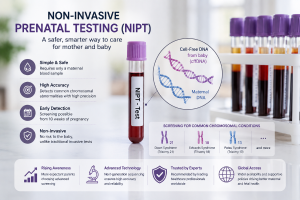
Non-Invasive Prenatal Testing Market Overview

Non-Invasive Prenatal Testing (NIPT) is an advanced prenatal genetic screening method that analyzes cell-free fetal DNA (cfDNA) circulating in the mother’s bloodstream to assess the risk of chromosomal abnormalities in the developing fetus. Unlike invasive procedures such as amniocentesis and chorionic villus sampling (CVS), NIPT requires only a maternal blood sample, eliminating the risk of miscarriage while providing highly accurate screening results.

The test is widely used for detecting Down syndrome (Trisomy 21), Edwards syndrome (Trisomy 18), Patau syndrome (Trisomy 13), sex chromosome abnormalities, and selected microdeletion syndromes. With growing awareness among healthcare providers and expectant parents regarding the benefits of early fetal screening, NIPT has become one of the fastest-growing segments within prenatal diagnostics.

Technological advancements in genomic sequencing, bioinformatics, and artificial intelligence have significantly enhanced test sensitivity, specificity, and turnaround times. Increasing healthcare expenditure, rising maternal age, expanding access to prenatal care, and supportive reimbursement policies in developed countries continue accelerating market adoption worldwide.

Non-Invasive Prenatal Testing Market Size and Forecast

Year Market Size (USD Billion)
2025 7.18
2026 8.05
2035 20.89
CAGR (2026–2035) 11.27%

Download the Sample: https://www.precedenceresearch.com/sample/3362

Non-Invasive Prenatal Testing Market Value Chain Analysis

Research & Technology Development

  • Leading biotechnology companies invest heavily in research and development to improve sequencing technologies, develop advanced bioinformatics platforms, enhance genetic interpretation software, and expand the range of detectable chromosomal abnormalities. Continuous innovation helps improve diagnostic accuracy while reducing testing costs.

Raw Material & Reagent Manufacturing

  • Manufacturers supply high-quality sequencing reagents, DNA extraction kits, laboratory consumables, microfluidic components, sequencing instruments, and quality control materials that form the foundation of accurate prenatal genetic testing. Maintaining regulatory compliance and product consistency is essential throughout this stage.

Clinical Laboratory Testing

  • Certified molecular diagnostic laboratories receive maternal blood samples, isolate fetal DNA, perform genomic sequencing using advanced platforms, analyze complex genetic information, and generate highly accurate clinical reports. Laboratory automation continues improving testing efficiency and reducing turnaround times.

Healthcare Providers & Genetic Counseling

  • Obstetricians, gynecologists, maternal-fetal medicine specialists, and genetic counselors play an essential role in recommending NIPT, interpreting results, educating expectant parents, and guiding follow-up diagnostic decisions when necessary.

Distribution & Healthcare Networks

  • Testing services are distributed through hospitals, diagnostic laboratories, fertility clinics, prenatal care centers, and expanding telemedicine platforms, making advanced prenatal screening increasingly accessible across both urban and rural populations.

How AI is Transforming the Non-Invasive Prenatal Testing Market

Artificial Intelligence is revolutionizing prenatal genetic screening by improving genomic data analysis, increasing laboratory efficiency, and enabling faster, more accurate interpretation of complex DNA sequencing results. AI-powered algorithms can rapidly identify chromosomal abnormalities while minimizing false-positive and false-negative results.

Machine learning models continuously analyze large genomic datasets to improve predictive accuracy and assist clinicians in making informed decisions. AI also streamlines laboratory workflows by automating repetitive analytical processes, improving quality control, and reducing overall testing time.

The integration of AI with cloud-based healthcare platforms allows physicians to access real-time reports, monitor patient information securely, and deliver personalized prenatal care through digital health ecosystems.

Key Benefits of AI in Non-Invasive Prenatal Testing

Intelligent Genetic Analysis

  • High-speed genomic sequencing interpretation
  • Improved detection of chromosomal abnormalities
  • Reduced analytical errors
  • Enhanced diagnostic confidence

Clinical Decision Support

  • Personalized pregnancy risk assessment
  • Automated clinical reporting
  • Better physician decision-making
  • Improved patient counseling

Laboratory Automation

  • Faster sample processing
  • Workflow optimization
  • Reduced turnaround time
  • Increased laboratory productivity

Predictive Prenatal Care

  • Early identification of pregnancy risks
  • Population health insights
  • Better pregnancy management
  • Precision medicine integration

How Government Initiatives are Supporting Market Growth

Governments across the world are strengthening maternal healthcare services through expanded prenatal screening programs, increased healthcare funding, and national genomic medicine initiatives. Public health organizations continue emphasizing the importance of early prenatal screening to reduce congenital disorders and improve maternal and infant health outcomes.

Several developed countries now provide reimbursement support for high-risk pregnancies undergoing NIPT, while emerging economies continue investing in prenatal healthcare infrastructure, laboratory modernization, and awareness campaigns. These initiatives are creating favorable conditions for wider adoption of advanced prenatal genetic testing.

What Factors are Driving the Growth of the Non-Invasive Prenatal Testing Market?

  • Increasing Maternal Age: The growing number of pregnancies among women aged 35 years and older has significantly increased demand for prenatal genetic screening because advanced maternal age is associated with a higher risk of chromosomal abnormalities.
  • Growing Awareness of Genetic Disorders: Healthcare providers and expectant parents are becoming increasingly aware of the importance of early fetal genetic screening, leading to greater acceptance of NIPT as a safe and reliable prenatal screening option.
  • Technological Advancements: Continuous innovations in next-generation sequencing, digital PCR, artificial intelligence, molecular diagnostics, and bioinformatics have enhanced testing accuracy, reduced costs, and expanded the range of detectable genetic abnormalities.
  • Expanding Personalized Medicine: The rapid adoption of precision medicine and genomic healthcare is encouraging healthcare systems to incorporate advanced prenatal screening technologies into routine pregnancy management.

Non-Invasive Prenatal Testing Market Major Growth Factors

Rising Demand for Early Diagnosis

  • Early detection of chromosomal abnormalities
  • Better pregnancy management
  • Improved neonatal healthcare planning
  • Reduced need for invasive procedures

Continuous Genomic Innovation

  • Advanced sequencing technologies
  • AI-assisted genetic analysis
  • Improved laboratory automation
  • Higher testing accuracy

Improving Healthcare Infrastructure

  • Expansion of prenatal diagnostic centers
  • Better laboratory facilities
  • Growing reimbursement coverage
  • Improved healthcare accessibility

Precision Medicine Adoption

  • Personalized prenatal care
  • Genetic counseling services
  • Data-driven clinical decisions
  • Advanced reproductive healthcare

Latest Trends in the Non-Invasive Prenatal Testing Market

Expansion Beyond High-Risk Pregnancies

  • NIPT is increasingly being recommended for average-risk pregnancies as clinical evidence continues demonstrating its high accuracy and cost-effectiveness.

AI-Powered Genomic Analytics

  • Artificial intelligence is enabling faster genomic interpretation, reducing diagnostic errors, and improving laboratory efficiency through automated analytical systems.

Expanded Screening Panels

  • Manufacturers continue introducing advanced testing panels capable of detecting additional chromosomal abnormalities, microdeletions, rare genetic disorders, and inherited conditions.

Digital Healthcare Integration

  • Cloud computing, telemedicine, electronic health records, and digital genetic counseling platforms are improving patient access to prenatal diagnostic services.

Sustainability Trends Transforming the Industry

The prenatal diagnostics industry is increasingly adopting sustainable laboratory operations through automation, digital reporting, reduced reagent consumption, energy-efficient sequencing systems, and environmentally responsible manufacturing practices.

Healthcare providers are also implementing paperless reporting systems and optimized laboratory logistics to minimize waste while improving operational efficiency.

Sustainability Initiatives

Green Laboratory Operations

  • Energy-efficient sequencing platforms
  • Digital documentation
  • Reduced laboratory waste
  • Sustainable procurement practices

Laboratory Efficiency

  • Automated workflows
  • Optimized reagent utilization
  • Reduced repeat testing
  • Improved operational productivity

Digital Healthcare

  • Electronic reporting
  • Cloud-based data storage
  • Virtual genetic counseling
  • Paperless healthcare systems

Growing Demand for Early Prenatal Screening Driving Market Expansion

The increasing prevalence of genetic disorders, delayed pregnancies, and rising awareness regarding fetal health are encouraging expectant parents to seek advanced prenatal screening earlier in pregnancy. NIPT provides highly accurate results with minimal risk, making it one of the preferred screening methods globally.

Growing investments in healthcare infrastructure, laboratory modernization, and precision medicine initiatives are expected to further increase testing volumes throughout the forecast period.

Non-Invasive Prenatal Testing Market Opportunities

  • Expansion Across Emerging Markets: Countries including India, China, Brazil, Indonesia, Mexico, and several Middle Eastern nations are witnessing rapid improvements in prenatal healthcare infrastructure, creating significant opportunities for diagnostic companies.
  • AI-Enabled Prenatal Diagnostics: The growing integration of artificial intelligence with genomic sequencing presents opportunities to improve diagnostic accuracy, laboratory efficiency, and personalized prenatal care.
  • Hospital and Laboratory Collaborations: Strategic partnerships between biotechnology companies, hospitals, diagnostic laboratories, and fertility clinics continue expanding access to advanced prenatal testing.
  • Precision Medicine Growth: Increasing adoption of personalized healthcare is creating new opportunities for comprehensive prenatal genomic screening services.

Why the Non-Invasive Prenatal Testing Market is Growing

The global Non-Invasive Prenatal Testing market is growing because healthcare providers and expectant parents increasingly prefer safe, reliable, and highly accurate prenatal screening methods. Rising maternal age, expanding awareness of genetic disorders, continuous advancements in genomic technologies, and improving healthcare infrastructure are significantly boosting market demand.

In addition, the integration of artificial intelligence, next-generation sequencing, digital healthcare platforms, and precision medicine is making NIPT faster, more accessible, and more affordable, ensuring strong long-term market growth through 2035.

Recent Developments in the Non-Invasive Prenatal Testing Market

  • March 2026: Illumina expanded its prenatal genomics portfolio with enhanced sequencing solutions for prenatal screening laboratories.
  • January 2026: Natera introduced upgraded bioinformatics capabilities to improve cfDNA analysis accuracy.
  • October 2025: Roche expanded molecular diagnostic offerings supporting prenatal genetic testing.
  • August 2025: Thermo Fisher Scientific launched new genomic workflow solutions for reproductive health laboratories.
  • May 2025: BGI Genomics expanded global availability of advanced prenatal genetic screening services.

Leading Companies in the Non-Invasive Prenatal Testing Market

Major companies operating in the global market include:

  • Illumina Inc.
  • Natera Inc.
  • Roche Diagnostics
  • Thermo Fisher Scientific Inc.
  • BGI Genomics
  • Quest Diagnostics
  • Laboratory Corporation of America Holdings (Labcorp)
  • F. Hoffmann-La Roche Ltd.
  • Agilent Technologies
  • PerkinElmer Inc.
  • Eurofins Scientific
  • Yourgene Health

Read More: Water Purifier Market

Segments Covered in the Report

By Product

  • Consumables
  • Instruments
  • Software & Services

By Technology

  • Next-Generation Sequencing (NGS)
  • Polymerase Chain Reaction (PCR)
  • Microarray
  • Others

By Application

  • Trisomy Detection
  • Microdeletion Syndrome Detection
  • Sex Chromosome Aneuploidy
  • Other Genetic Disorders

By End User

  • Hospitals
  • Diagnostic Laboratories
  • Clinics
  • Research Institutes

By Region

  • North America
  • Europe
  • Asia-Pacific
  • Latin America
  • Middle East & Africa

Future Outlook

The global Non-Invasive Prenatal Testing market is expected to witness sustained growth through 2035, driven by increasing adoption of genomic medicine, expanding prenatal healthcare services, technological advancements in sequencing, and rising awareness of fetal genetic screening.

Artificial intelligence, cloud-based genomic analytics, laboratory automation, and precision medicine will continue transforming prenatal diagnostics by improving testing accuracy, reducing turnaround time, and enabling personalized prenatal care.

Manufacturers and diagnostic service providers are expected to invest heavily in advanced sequencing technologies, AI-enabled clinical decision support, expanded genetic panels, and global healthcare partnerships to strengthen their competitive position while improving access to safe, accurate, and affordable prenatal screening worldwide.

You can place an order or ask any questions. Please feel free to contact us at sales@precedenceresearch.com | +1 804 441 9344

Gayatri Ghorapade

SEO Executive