
Procurement as a Service Market to Surpass USD 29.58 Billion by 2035
The global procurement as a service market is experiencing strong growth momentum as enterprises increasingly modernize procurement operations to improve cost efficiency, supplier visibility, and operational agility. Rising demand for strategic sourcing optimization, increasing adoption of cloud-based procurement platforms, and growing integration of artificial intelligence across procurement workflows are reshaping the global procurement ecosystem.
According to insights published by Precedence Research, the global procurement as a service market size was valued at USD 11.20 billion in 2025 and is projected to reach approximately USD 29.58 billion by 2035, expanding at a CAGR of 10.20% from 2026 to 2035.
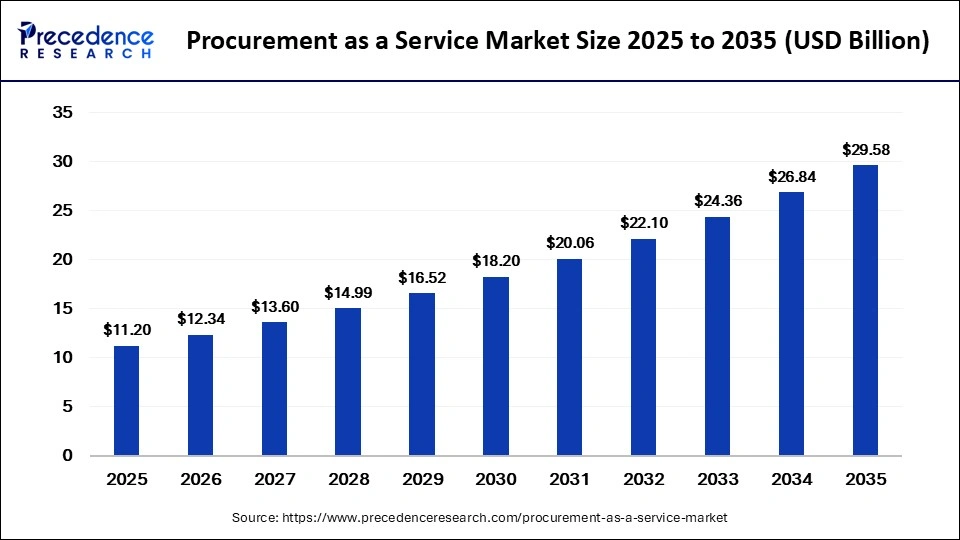
Organizations across industries are increasingly outsourcing procurement functions to specialized service providers in order to streamline sourcing activities, improve spend visibility, strengthen supplier management, and accelerate digital transformation initiatives.
Read Also: Eyewear Market
Quick Insights: What is Accelerating the Procurement as a Service Market?
- The procurement as a service market is forecast to reach USD 29.58 billion by 2035, growing at a CAGR of 10.20% during the forecast period.
- North America dominated the global market in 2025 due to strong enterprise digitalization and advanced cloud infrastructure.
- Asia Pacific is expected to witness the fastest growth owing to rapid enterprise modernization and rising cloud adoption among SMEs.
- Strategic sourcing services accounted for a major market share because enterprises increasingly prioritize supplier optimization and procurement efficiency.
- Cloud-based procurement platforms are rapidly gaining adoption due to scalability, flexibility, and reduced operational costs.
- AI-powered spend analytics and supplier risk management systems are becoming critical components of modern procurement ecosystems.
How is Artificial Intelligence Transforming Procurement as a Service?
Artificial intelligence is rapidly revolutionizing procurement operations by enabling predictive sourcing, automated procurement workflows, and intelligent supplier management.
AI-powered procurement platforms are helping enterprises:
- Automate repetitive procurement tasks
- Improve sourcing decisions
- Optimize supplier negotiations
- Forecast procurement demand
- Reduce procurement cycle times
- Strengthen spend visibility
Machine learning algorithms analyze supplier data, procurement histories, pricing trends, and market conditions to generate actionable procurement insights and cost-saving opportunities.
AI integration is also accelerating robotic process automation (RPA) across:
- Invoice processing
- Contract management
- Supplier onboarding
- Compliance monitoring
- Purchase order automation
These intelligent procurement ecosystems are improving operational efficiency while reducing procurement risks and administrative burdens.
Additionally, generative AI is beginning to reshape supplier communication and procurement decision-making by enabling faster data interpretation and automated sourcing recommendations.
What are the Major Growth Drivers of the Procurement as a Service Market?
Why are Enterprises Increasingly Outsourcing Procurement Functions?
Organizations are increasingly outsourcing procurement operations to focus on core business functions while improving procurement efficiency and reducing operational complexity.
Procurement as a service solutions enable enterprises to:
- Access procurement expertise
- Improve sourcing strategies
- Reduce procurement costs
- Enhance supplier management
- Accelerate procurement digitization
Outsourcing procurement also helps businesses improve scalability and flexibility without maintaining large internal procurement teams.
The growing complexity of global supplier networks is further encouraging enterprises to adopt outsourced procurement models.
How are Supply Chain Disruptions Accelerating Procurement Transformation?
Global supply chain disruptions, geopolitical uncertainties, and inflationary pressures are significantly increasing the need for agile procurement strategies.
Organizations increasingly require:
- Real-time supplier visibility
- Risk management capabilities
- Procurement transparency
- Predictive sourcing analytics
- Alternative supplier identification
Procurement as a service providers are helping enterprises improve supply chain resilience through advanced analytics and digital procurement solutions.
The rising importance of supplier diversification and procurement intelligence is expected to remain a major market growth catalyst.
Why is Cloud Adoption Becoming Essential for Modern Procurement?
Cloud-native procurement platforms are rapidly replacing traditional procurement systems due to:
- Lower infrastructure costs
- Scalability
- Real-time accessibility
- Workflow automation
- Improved collaboration
Cloud deployment models enable procurement teams to manage sourcing activities from multiple locations while improving supplier communication and operational efficiency.
Small and medium-sized enterprises are particularly benefiting from affordable SaaS-based procurement platforms that eliminate the need for expensive IT infrastructure investments.
What Opportunities are Emerging in the Procurement as a Service Market?
Can ESG and Sustainable Procurement Create New Growth Opportunities?
Yes. Environmental, social, and governance (ESG) initiatives are becoming increasingly important within procurement operations.
Organizations are prioritizing:
- Ethical sourcing
- Carbon footprint monitoring
- Sustainable supplier selection
- Regulatory compliance
- Transparent procurement practices
Procurement service providers integrating ESG analytics and sustainability tracking tools are expected to gain strong competitive advantages in the coming years.
As sustainability regulations continue evolving globally, enterprises are expected to increase investments in ESG-focused procurement technologies.
Will SMEs Become a Key Growth Segment for Procurement as a Service Providers?
Absolutely. Small and medium-sized enterprises are increasingly adopting procurement outsourcing solutions to improve operational efficiency and access advanced procurement technologies.
Procurement as a service enables SMEs to:
- Reduce procurement costs
- Access strategic sourcing expertise
- Improve supplier negotiations
- Accelerate digital transformation
- Improve procurement transparency
The growing availability of cloud-native procurement solutions is making enterprise-grade procurement capabilities more accessible to smaller businesses worldwide.
Which Regions are Leading the Procurement as a Service Market?
Why Does North America Continue to Dominate the Market?
North America accounted for the dominant market share in 2025 because of:
- Advanced enterprise digitalization
- Strong cloud infrastructure
- Rapid AI adoption
- Mature procurement ecosystems
- Presence of leading technology providers
The United States continues leading procurement innovation through aggressive investments in intelligent sourcing platforms, digital supply chain systems, and procurement automation technologies.
The region also benefits from strong enterprise demand for operational efficiency and compliance-driven procurement solutions.
Why is Asia Pacific Emerging as the Fastest-Growing Market?
Asia Pacific is projected to witness the fastest growth during the forecast period due to:
- Expanding SME ecosystems
- Rapid industrialization
- Increasing enterprise cloud adoption
- Rising digital transformation initiatives
- Growing procurement outsourcing demand
Countries such as India, China, and Japan are increasingly investing in procurement automation and cloud-based enterprise solutions.
The region’s expanding manufacturing sector and growing cross-border trade activities are also accelerating procurement modernization initiatives.
Segmentation Analysis of the Procurement as a Service Market
By Service Type
- Strategic Sourcing
- Spend Management
- Category Management
- Contract Management
- Supplier Management
- Procurement Operations
Strategic sourcing dominated the market due to rising enterprise focus on procurement efficiency and supplier optimization.
By Deployment Mode
- Cloud-Based
- On-Premise
Cloud-based deployment accounted for the largest market share because of scalability, flexibility, and lower operational costs.
By Organization Size
- Large Enterprises
- SMEs
Large enterprises dominated the market due to complex procurement ecosystems and extensive supplier networks.
However, SMEs are projected to witness significant growth as affordable cloud procurement solutions become increasingly available.
By Industry Vertical
- BFSI
- Manufacturing
- Healthcare
- Retail & E-Commerce
- IT & Telecom
- Energy & Utilities
- Government
The BFSI sector accounted for a significant market share due to strict compliance requirements and increasing focus on procurement transparency.
Manufacturing and retail industries are also aggressively adopting procurement automation platforms to improve supply chain agility and operational efficiency.
Which Companies are Leading Innovation in the Procurement as a Service Industry?
Several major consulting firms and technology providers are aggressively investing in intelligent procurement ecosystems and AI-powered sourcing platforms.
Major Companies in the Procurement as a Service Market
- Accenture
- Capgemini
- Genpact
- IBM Corporation
- Infosys
- Tata Consultancy Services (TCS)
- Wipro
- HCL Technologies
- GEP
- WNS Holdings
These companies are heavily focused on:
- AI-powered procurement automation
- Supplier risk analytics
- ESG procurement solutions
- Intelligent sourcing platforms
- Cloud procurement transformation
- Predictive spend management
Recent Developments and Industry Breakthroughs
The procurement industry is rapidly evolving through:
- AI-powered sourcing automation
- Intelligent spend analytics
- Predictive procurement systems
- Autonomous supplier management
- Cloud-native procurement platforms
Enterprises are increasingly integrating generative AI technologies into procurement workflows to improve sourcing efficiency and supplier communication.
Procurement providers are also expanding investments in ESG monitoring tools and real-time procurement intelligence platforms.
These innovations are helping organizations improve procurement transparency, operational agility, and long-term supply chain resilience.
What Challenges are Affecting the Procurement as a Service Market?
Why Do Cybersecurity and Compliance Risks Remain Major Concerns?
As procurement systems increasingly migrate to cloud environments, concerns related to:
- Data privacy
- Cybersecurity threats
- Supplier information security
- Regulatory compliance
- Third-party risk exposure
continue creating adoption barriers for certain organizations.
Highly regulated industries often require advanced governance frameworks before outsourcing procurement functions.
How Do Legacy Systems Slow Procurement Modernization?
Many organizations continue relying on outdated procurement infrastructure and manual workflows.
Challenges such as:
- ERP integration complexity
- High migration costs
- Internal resistance to automation
- Limited procurement digitization expertise
continue slowing enterprise procurement transformation efforts.
Case Study: How AI-Powered Procurement Improved Enterprise Efficiency
Several enterprises implementing AI-enabled procurement platforms reported measurable improvements in:
- Procurement cycle times
- Supplier onboarding efficiency
- Spend visibility
- Procurement accuracy
- Cost optimization
AI-driven analytics enabled procurement teams to identify sourcing inefficiencies and negotiate better supplier contracts, significantly improving operational productivity.
These successful implementations are accelerating enterprise investment in intelligent procurement ecosystems globally.
Future Outlook: What’s Next for the Procurement as a Service Industry?
The future of procurement as a service will likely be shaped by:
- Autonomous procurement systems
- AI-powered sourcing intelligence
- ESG-driven procurement strategies
- Predictive supplier analytics
- Intelligent procurement automation
- Cloud-native procurement ecosystems
As organizations continue prioritizing operational resilience and supply chain agility, procurement is increasingly evolving into a strategic, technology-driven business function.
Companies investing in AI innovation, sustainable sourcing, and cloud procurement transformation are expected to secure strong competitive advantages across the rapidly evolving global procurement as a service market.
