
Blood Pressure Monitoring Devices Market Size, Share and Forecast 2026 to 2035
The global blood pressure monitoring devices market size was valued at USD 2.27 billion in 2025 and is projected to reach approximately USD 5.02 billion by 2035, expanding at a CAGR of 8.26% during the forecast period from 2026 to 2035. Rising obesity rates, increasing awareness regarding cardiovascular health, and the growing demand for convenient monitoring solutions are expected to fuel market growth throughout the forecast period.
The global blood pressure monitoring devices market is witnessing remarkable expansion as healthcare systems increasingly focus on preventive care, early diagnosis, and remote patient management. Blood pressure monitoring has become a critical component of cardiovascular healthcare due to the growing prevalence of hypertension, obesity, diabetes, and age-related chronic diseases worldwide. The shift toward home-based healthcare and digital health technologies is further accelerating the adoption of advanced monitoring solutions.
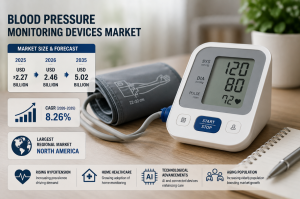
Blood Pressure Monitoring Devices Market Size and Forecast
The market continues to demonstrate strong growth potential as healthcare providers and patients prioritize regular blood pressure assessment. Technological innovations, expanding healthcare infrastructure, and increasing accessibility to monitoring devices are expected to sustain long-term market expansion.
| Market Indicator | Value |
|---|---|
| Market Size (2025) | USD 2.27 Billion |
| Market Size (2026) | USD 2.46 Billion |
| Forecast Value (2035) | USD 5.02 Billion |
| CAGR (2026–2035) | 8.26% |
| Largest Regional Market | North America |
| Base Year | 2025 |
| Forecast Period | 2026–2035 |
Growing Burden of Hypertension Driving Market Expansion
Hypertension remains one of the most significant public health concerns globally. Often referred to as a silent killer, elevated blood pressure substantially increases the risk of cardiovascular diseases, stroke, kidney disorders, and premature mortality.
According to data published by the Centers for Disease Control and Prevention in January 2025, nearly half of adults in the United States suffer from high blood pressure. Approximately 119.9 million adults have hypertension, while around 37 million adults experience uncontrolled blood pressure levels exceeding 140/90 mmHg. In 2022, high blood pressure contributed to 685,875 deaths across the United States.
The increasing prevalence of obesity, sedentary lifestyles, unhealthy dietary habits, smoking, and stress continues to elevate hypertension rates globally. Consequently, healthcare providers are emphasizing routine blood pressure monitoring to enable early diagnosis and effective disease management.
Transition Toward Home-Based Healthcare
The healthcare industry is undergoing a substantial transformation as patient care increasingly shifts beyond traditional clinical settings. Home healthcare has emerged as an attractive alternative that improves convenience while reducing hospital visits and healthcare expenditures.
Patients diagnosed with hypertension often require frequent monitoring to evaluate treatment effectiveness and detect fluctuations in blood pressure levels. Digital blood pressure monitors designed for home use allow individuals to actively participate in disease management without relying solely on clinical appointments.
Bluetooth connectivity, smartphone applications, cloud-based reporting systems, and wireless transmission capabilities are enabling seamless communication between patients and healthcare professionals. This trend has accelerated the demand for compact, portable, and easy-to-use blood pressure monitoring devices.
How Artificial Intelligence Is Transforming Blood Pressure Monitoring
Artificial intelligence is redefining the future of blood pressure monitoring by enhancing accuracy, personalization, and predictive healthcare capabilities.
AI-powered devices analyze large volumes of patient data collected through continuous or periodic measurements. These systems identify abnormal trends, detect early warning signs of hypertension progression, and assess cardiovascular risk profiles before symptoms become severe.
Machine learning algorithms integrated into wearable devices and mobile applications generate personalized recommendations based on individual health patterns, lifestyle habits, and medical histories. Healthcare providers benefit from actionable insights that support optimized treatment planning and proactive interventions.
The integration of AI into blood pressure monitoring is shifting healthcare delivery from reactive disease treatment toward preventive health management.
Aging Population Strengthening Market Demand
Population aging represents one of the strongest contributors to blood pressure monitoring device adoption.
Older adults are particularly vulnerable to hypertension due to physiological changes associated with aging. The prevalence of cardiovascular diseases, diabetes, kidney disorders, and metabolic conditions increases significantly among elderly populations, creating sustained demand for monitoring technologies.
Global demographic projections indicate that the number of people aged 65 years and above will exceed 1.5 billion by 2050. The proportion of elderly individuals worldwide is expected to increase from 9.3% in 2020 to nearly 16% by 2050.
User-friendly digital monitors equipped with large displays, automated inflation mechanisms, and simplified interfaces are increasingly preferred by elderly users seeking independence in health management.
Technological Innovations Accelerating Industry Growth
- Continuous technological advancements are reshaping the competitive landscape of the blood pressure monitoring devices market.
- Modern devices now offer features such as irregular heartbeat detection, multi-user memory storage, smartphone synchronization, voice guidance, and cloud connectivity. These innovations enhance usability while improving the quality of patient care.
- The emergence of wearable blood pressure monitors has created new opportunities for continuous monitoring. Smartwatches, wristbands, and cuffless monitoring technologies provide convenient alternatives to traditional cuff-based systems.
- Mobile health applications further strengthen patient engagement by supporting medication adherence, treatment reminders, physician follow-ups, and lifestyle modification programs.
- As technology continues to evolve, blood pressure monitoring devices are becoming increasingly intelligent, connected, and patient-centric.
Recent Developments in the Market
Innovation remains central to the industry’s evolution.
- In April 2025, BD introduced a surgical monitoring platform featuring AI-powered blood pressure prediction capabilities designed to identify potentially life-threatening blood pressure fluctuations during procedures.
- In October 2024, Novosound unveiled the world’s first ultrasonic blood pressure monitor capable of supporting miniaturized wearable applications while maintaining accuracy comparable to conventional cuff-based systems.
- In December 2024, Withings received FDA approval for its BPM Pro 2 cellular blood pressure monitor, enhancing remote patient monitoring capabilities for individuals with heart failure.
- In November 2024, Aktiia expanded internationally following Health Canada approval of its continuous blood pressure monitoring wristband, representing a significant advancement in cuffless monitoring technologies.
Future Outlook
The future of the blood pressure monitoring devices market appears exceptionally promising as healthcare systems increasingly prioritize prevention, accessibility, and personalized care. The convergence of artificial intelligence, wearable technology, remote patient monitoring, and digital health platforms is transforming how hypertension is diagnosed and managed. Consumers are becoming more proactive regarding their health, while healthcare providers seek efficient solutions capable of improving outcomes and reducing costs.
As the global burden of cardiovascular disease continues to rise, blood pressure monitoring devices will remain indispensable tools within both clinical and home healthcare environments. Companies that successfully combine technological innovation, affordability, and user-centric design are expected to lead the next phase of market growth through 2035.
Check this report to: Aluminum Foil Packaging Market
Get this report to explore global market size, share, CAGR, and trends, featuring detailed segmental analysis and an insightful competitive landscape overview: https://www.precedenceresearch.com/sample/1090
You can place an order or ask any questions. Please feel free to contact us at sales@precedenceresearch.com |+1 804 441 9344
