
U.S. Dietary Supplements Market Size, Share and Forecast 2026 to 2035
The U.S. dietary supplements market was valued at USD 78.2 billion in 2025 and is projected to reach approximately USD 190.08 billion by 2035, expanding at a CAGR of 9.29% from 2026 to 2035. Growing health awareness, increasing preventive healthcare spending, and a rapidly aging population are among the key factors driving market growth across the United States.
As consumers become more proactive about maintaining their health and wellness, dietary supplements have moved beyond niche health products to become an integral part of everyday routines. From vitamins and probiotics to sports nutrition and prenatal supplements, the market is witnessing robust demand across multiple consumer groups.
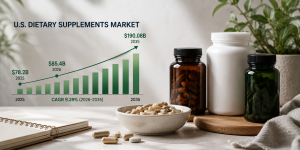
U.S. Dietary Supplements Market Size and Forecast
The U.S. dietary supplements industry continues to demonstrate strong growth as consumers increasingly prioritize wellness, immunity, and disease prevention. Growing disposable income and easy product accessibility through online and offline channels are expected to support sustained expansion over the next decade.
| Market Indicator | Value |
|---|---|
| Market Size (2025) | USD 78.20 Billion |
| Market Size (2026) | USD 85.40 Billion |
| Forecast Value (2035) | USD 190.08 Billion |
| CAGR (2026–2035) | 9.29% |
| Largest Regional Market | North America |
| Base Year | 2025 |
| Forecast Period | 2026-2035 |
Rising Focus on Preventive Healthcare Driving Market Growth
- Americans are becoming increasingly conscious of maintaining long-term health rather than treating illnesses after they occur. Preventive healthcare practices such as regular exercise, healthy eating habits, and nutritional supplementation have gained significant traction.
- Dietary supplements provide essential nutrients that may be lacking in daily diets. Consumers use these products to support immunity, bone health, cardiovascular wellness, digestive health, cognitive function, and overall vitality.
- Additionally, increasing healthcare expenditures and rising awareness campaigns regarding nutrition have encouraged more individuals to incorporate supplements into their daily routines.
How Artificial Intelligence Is Transforming the Dietary Supplements Industry
- Artificial intelligence is emerging as a powerful force reshaping product development and consumer engagement within the dietary supplements market.
- AI technologies help manufacturers analyze consumer preferences, identify nutritional deficiencies, and develop personalized supplement formulations tailored to individual needs. Predictive analytics and machine learning also accelerate ingredient discovery and product innovation.
- A notable example came in January 2023, when Nutrabolt launched Cellucor P6 Ultimate, an AI-powered testosterone booster developed using intelligent ingredients identified through advanced computational techniques.
- As personalization becomes a major trend, AI is expected to play a larger role in delivering targeted nutritional solutions that improve customer outcomes and satisfaction.
Aging Population Fueling Supplement Demand
- One of the strongest growth drivers for the U.S. dietary supplements market is the country’s aging population.
- Older adults often experience nutritional deficiencies and are more susceptible to chronic conditions such as osteoporosis, cardiovascular disease, weakened immunity, and joint disorders. Consequently, they increasingly rely on supplements to maintain their health and independence.
- Energy supplements, vitamins, omega fatty acids, and immunity boosters have become particularly popular among senior consumers seeking to improve quality of life and support healthy aging.
Benefits Associated with Dietary Supplements
The growing acceptance of dietary supplements can largely be attributed to their perceived health benefits.
Consumers use supplements for a variety of reasons, including:
- Supporting immune health
- Improving bone strength
- Enhancing cardiovascular function
- Promoting digestive wellness
- Maintaining healthy skin, hair, and nails
- Increasing energy levels
- Managing weight
- Supporting prenatal health
- Improving mental focus and cognitive performance
As education around nutritional deficiencies expands, demand for evidence-based supplementation continues to increase.
Market Challenges: Concerns Over Side Effects
- Despite their widespread popularity, dietary supplements are not without challenges.
- Improper usage, excessive consumption, and poor-quality formulations may contribute to side effects such as allergic reactions, digestive discomfort, skin irritation, and interactions with medications.
- Furthermore, intense competition among market participants and growing consumer scrutiny regarding product safety and transparency may restrain market growth to some extent.
- Manufacturers are responding by emphasizing clinical validation, ingredient transparency, and physician-backed recommendations.
Emerging Trends in the U.S. Dietary Supplements Market
Consumer preferences continue to evolve, shaping future market trends.
According to industry surveys:
- 76% of Americans consumed vitamins and minerals during the previous year.
- 40% used specialty supplements.
- 39% consumed botanical and herbal products.
- 28% used sports nutrition supplements.
- 17% reported using weight management supplements.
Additionally, approximately 74% of U.S. adults currently take dietary supplements, with more than half identifying as regular users.
These figures underscore the growing importance of nutritional supplementation in everyday health management.
Recent Developments
Innovation continues to define the competitive landscape of the dietary supplements market.
- In September 2024, Bonafide Health and Otsuka Pharmaceutical introduced Thermella™, a plant-based supplement designed to support women experiencing menopause.
- In June 2024, Bausch + Lomb launched Blink NutriTears, an over-the-counter supplement formulated to support healthy tear production and address dry eye symptoms.
- Manufacturers continue investing in scientific research, personalized nutrition platforms, and digital health integrations to differentiate their offerings.
Future Outlook
The future of the U.S. dietary supplements market remains highly promising. Consumers are increasingly embracing proactive health management, driving demand for products that support immunity, energy, healthy aging, and disease prevention.
Advancements in artificial intelligence, personalized nutrition, and digital health technologies are expected to redefine the consumer experience while creating new growth opportunities for manufacturers. As healthcare systems shift toward preventive care and individuals become more invested in their long-term well-being, dietary supplements will continue to play an essential role in modern health management.
Check this report to: Blood Pressure Monitoring Devices Market
Get this report to explore global market size, share, CAGR, and trends, featuring detailed segmental analysis and an insightful competitive landscape overview: https://www.precedenceresearch.com/sample/5207
You can place an order or ask any questions. Please feel free to contact us at sales@precedenceresearch.com |+1 804 441 9344
Companies that prioritize innovation, transparency, product quality, and consumer trust are well positioned to lead the next phase of growth through 2035.
